James Hardie Junior ADU Conversion: The Orange County Owner’s Guide
We stock and install James Hardie-compatible materials for junior ADU conversions throughout Orange County, with most complete garage-to-JADU conversions running between $85,000 and $140,000 depending on square footage, utility rough-ins, and finish level. A prefab shell from a manufacturer like Abodu or Cover paired with James Hardie siding and trim typically lands in that range once permits, site work, and utility connections are included. Most homeowners discover a failed or failing component the hard way: a hairline crack in HardiePlank lap siding near the garage slab, moisture staining at the bottom edge of HardiePanel, or trim boards pulling away at the corners after a few seasons of Santa Ana winds and coastal humidity cycles.
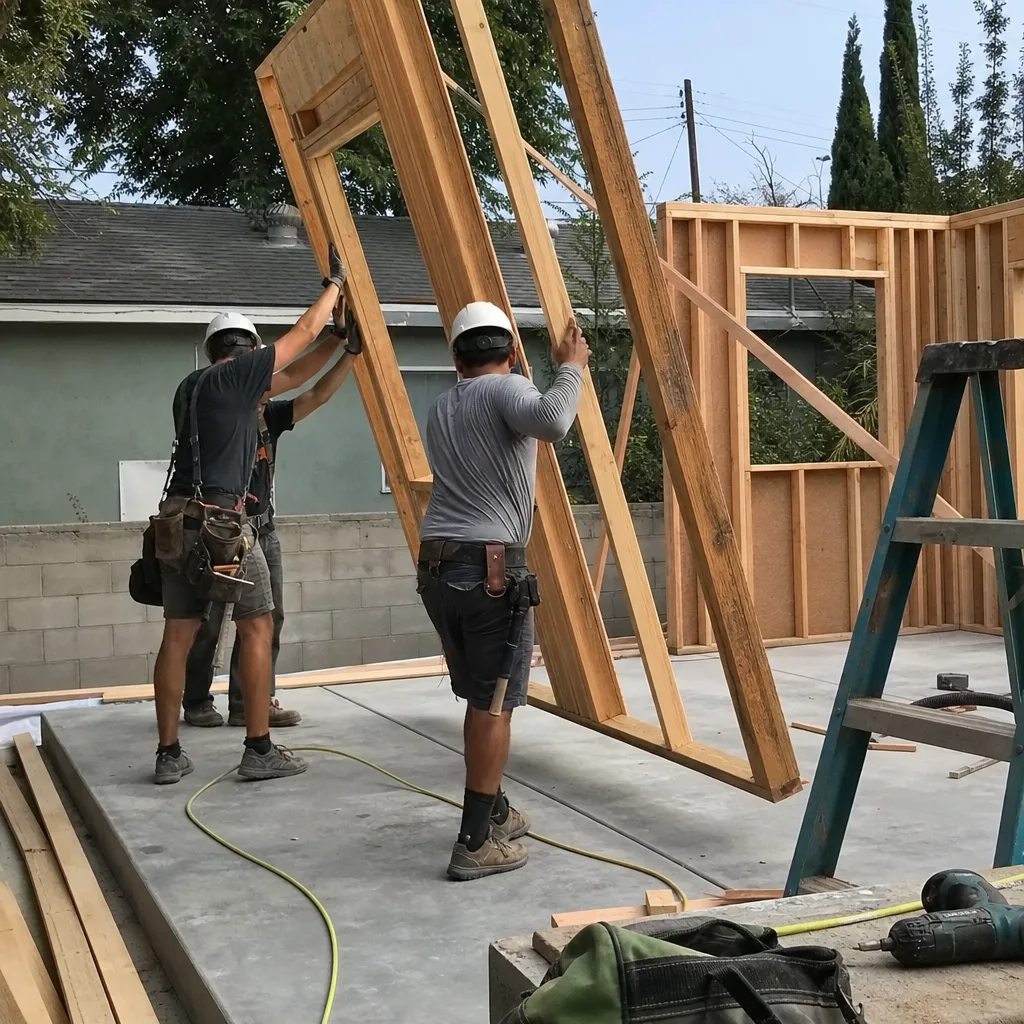
If you’re reading this because water is getting where it shouldn’t, or the siding underneath your conversion is swelling, flaking, or separating, this page tells you what to check, what it costs to make right, and how we handle the fix across Orange County.
Which James Hardie Models This Applies To
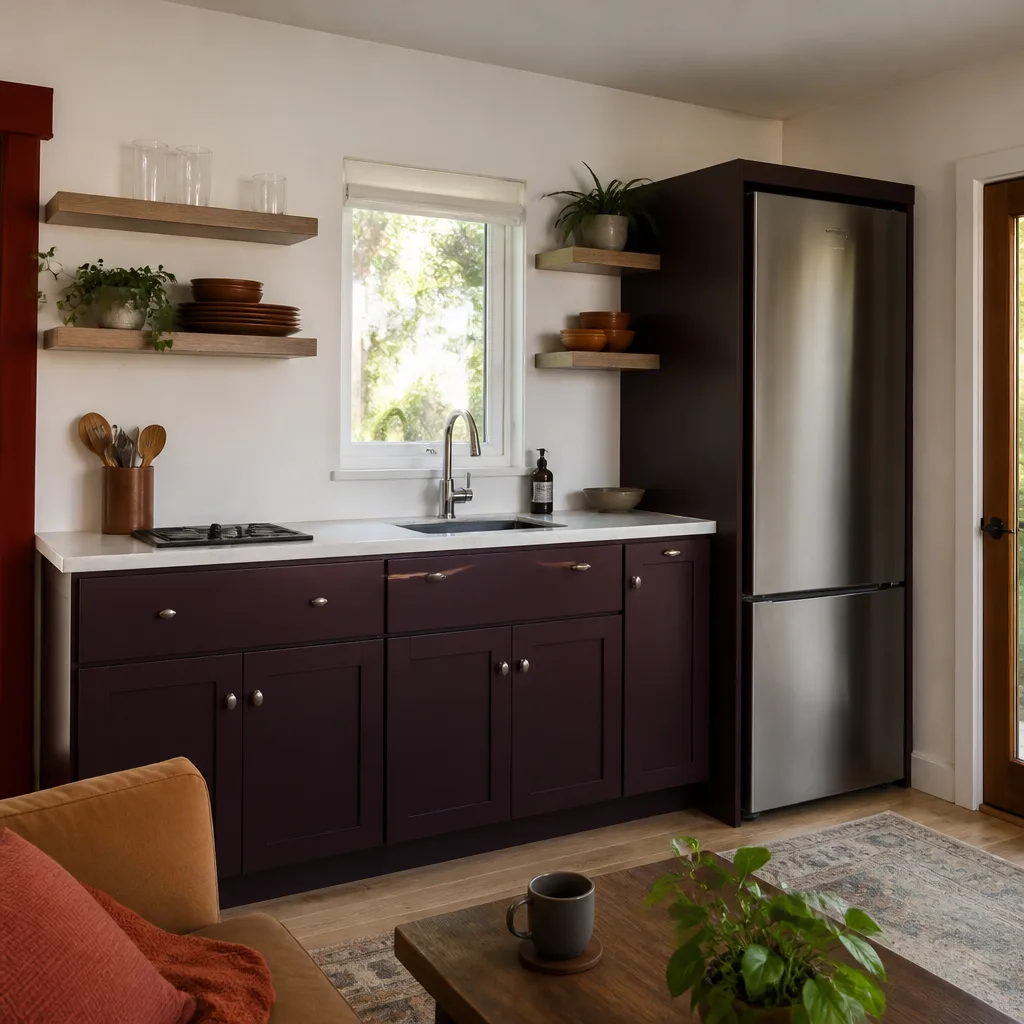
Junior ADU conversions in Orange County most often involve one of three James Hardie product lines: HardiePlank lap siding, HardiePanel vertical siding, and HardieTrim boards. The compatibility gotcha that catches owners off guard is thickness. HardiePlank comes in 5/16″ and 7/16″ profiles, and if your garage was built in the 2000s or earlier, there’s a good chance it has the thinner 5/16″ profile. You cannot swap in the thicker board without adjusting trim detailing and flashing, and mixing the two on one wall creates a visible seam that catches water.
HardiePanel runs 4’x8′, 4’x9′, and 4’x10′, and the 4’x10′ panel is what most Orange County ADU plans call for to reduce horizontal seams on a standard 10-foot garage wall. James Hardie has also shifted production across several plants in the last decade, and we’ve seen color batch variations between older HardiePlank in Warm Beige or Monterey Taupe and current factory runs. If you’re patching rather than residing, know that you may be chasing a 10-year-old fade. For most JADU conversions, we recommend fresh HardiePanel with HardieTrim corners and a full repaint, because a partial patch on a sun-exposed south wall in Anaheim Hills or Tustin won’t match. Lodgewick ADU Orange County is an independent provider; we’re not affiliated with James Hardie, but we’ve installed their siding and trim on ADU jobs across Orange County for years and know which part numbers match which existing elevations.
Signs Your James Hardie Junior ADU Conversion Is Failing
- Bottom-edge swelling or delamination on the garage-facing wall. This is almost always a clearance problem. James Hardie requires a minimum 1″ gap between the bottom of the siding and any horizontal surface like a concrete walk or planter bed. Orange County landscapers love to pile soil or mulch against garage walls, and that moisture wicks straight up into the fiber cement.
- Corner trim separating from the wall plane. HardieTrim corners are nailed and caulked. When the caulk bead fails along the vertical joint, seasonal expansion and contraction – we see 40-degree temperature swings between a Santa Ana heat wave and a foggy June morning – works the trim loose. Water follows the gap and starts rotting the framing behind it.
- Hairline vertical cracks radiating from window or door corners. Fiber cement is stiff. If the header above a garage door or a new JADU window wasn’t properly flashed and sealed, the framing movement transfers stress to the siding, and it cracks in the corners first.
- Paint peeling in horizontal bands, not random patches. Random peeling is usually paint failure. Horizontal banding at lap joints or around fastener lines means water is getting behind the siding and pushing moisture outward. By the time the paint lets go, the vapor barrier is already compromised.
- Visible screw or nail pops pushing through the siding face. Older garage conversions in Orange County often used standard drywall screws instead of James Hardie’s specified corrosion-resistant fasteners. Coastal moisture reaches them, they rust, they expand, and the fastener head pushes through the board. We’ve pulled screws from a garage conversion in Costa Mesa that snapped in half with two fingers.
Replacement Cost & What’s Included
For a typical single-car garage JADU conversion in Orange County, replacing failed James Hardie siding and trim on the affected wall runs between $9,500 and $18,500 including materials, demolition of the failed boards, re-flashing, and paint-matched finishing. A full re-side on all four elevations typically falls between $22,000 and $40,000, depending on the square footage, whether we’re working around existing windows and doors or setting new ones, and how much framing repair the water damage left behind.
Here’s what drives the range:
- Framing condition. If the siding failure let water sit for a season, we’re replacing sill plates and bottom plates, not just covering them. That’s the difference between a $10,000 patch and a $25,000 structural repair.
- Access. A detached garage with a 6-foot side setback in a tight Irvine tract is a different job than an attached garage with an open pad in Yorba Linda.
- Trim and flashing needed. James Hardie’s installation spec calls for specific flashing details at windows, doors, and the slab transition. If the original conversion skipped those, we’re correcting them.
Every quote we write includes the parts, the labor, the flashing, the paint, and the cleanup. No change orders, no surprise line items. And every job carries our 365-Day Done Right Promise in writing: if the install isn’t right, we come back at no charge and make it right.
DIY or Call Us?
You can check a few things yourself without opening a wall: if you see soil, mulch, or gravel beds touching your siding, pull them back; if you see caulk crumbling at trim joints, you found a likely water entry point; if you see exposed fastener heads, that’s a red flag but not an emergency. Those inspections cost nothing and tell you how urgent the problem is.
Where DIY goes wrong is the install. James Hardie fiber cement needs the right fastener spacing, the right clearance off horizontal surfaces, the right flashing order at the bottom edge, and the right sealing at every cut edge. Miss any one of those, and the repair fails again in two or three seasons, which is why so many homeowners in Orange County end up paying twice for the same wall. Cutting fiber cement also produces silica dust, which is genuinely harmful to breathe without proper respiratory protection. This work isn’t dangerous to have done, but it’s worth having done by a crew that does it every week. If you want an honest look at what your wall actually needs, call (350) 203-6060 and we’ll come out and take a look.
FAQs
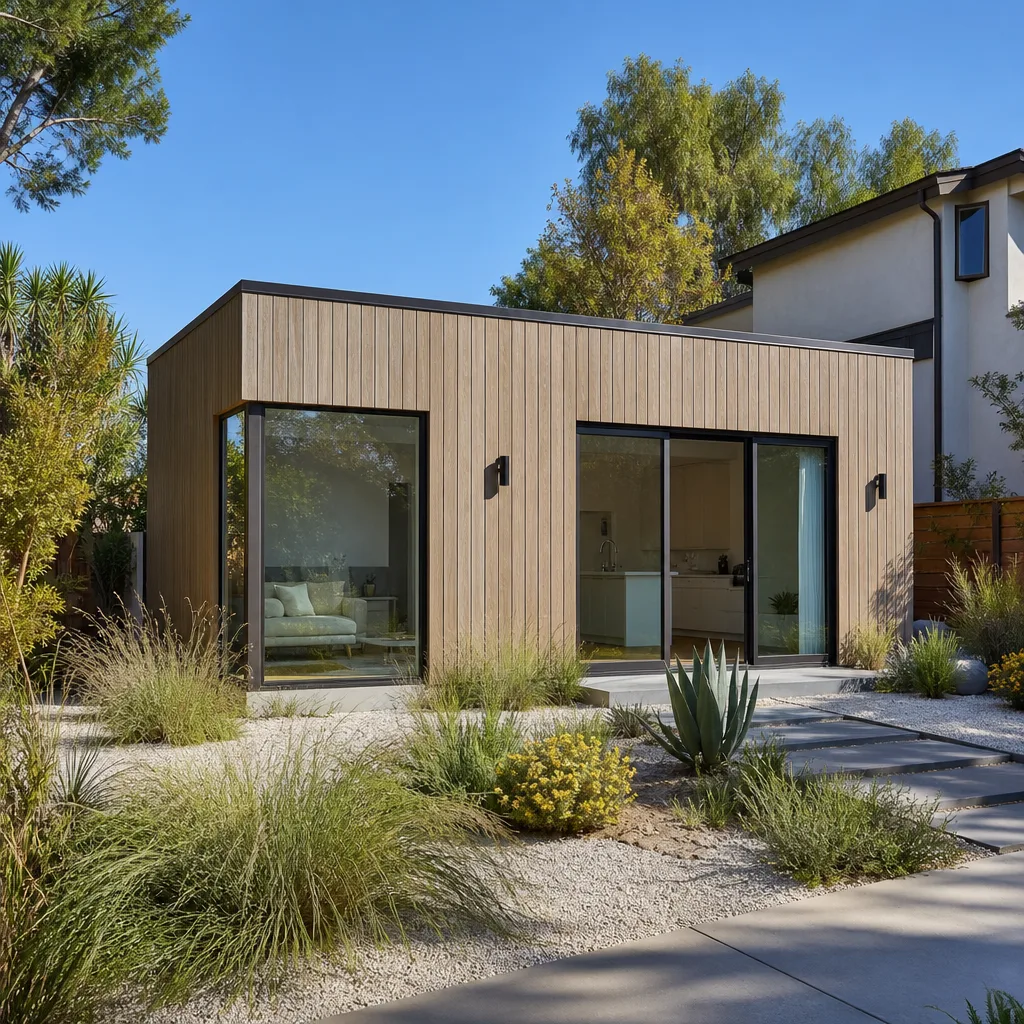
James Hardie siding typically lasts 30 to 50 years in Orange County when installed to spec, but the weak points are always the bottom edge clearance, trim joints, and any place a landscaper pushed soil against the wall. We see well-installed jobs here hit the 30-year mark without issue, and bad installs fail in six or seven. Call (350) 203-6060 and we’ll tell you honestly which category yours is in.
A single cracked board or a section of failed trim can usually be repaired, but if water has been behind the siding for more than a season, the framing underneath is likely compromised, and a patch job is just a bandage. The answer depends on what’s behind the board, not the board itself. Call (350) 203-6060 for a free inspection and a straight answer.
A single-wall replacement usually takes two to three working days including re-flashing and paint matching. A full re-side on a garage conversion runs one to two weeks depending on framing repairs and weather. We give you a defined arrival window and a written timeline before we start.
We stock common HardiePlank profiles, HardiePanel sheets, HardieTrim boards, flashing, and corrosion-resistant fasteners on our trucks, so most repairs don’t wait on a supply-house order. If your wall needs a less common profile or a specific color batch, we source it from our Orange County suppliers and tell you the lead time up front. Call (350) 203-6060 and we’ll check what your wall needs while you’re on the line.
If you have a James Hardie junior ADU conversion in Orange County that’s showing its age, or you’re planning a conversion and want the siding done right the first time, call (350) 203-6060 to schedule a free estimate. We also work with Abodu, Cover, and Dvele prefab shells when the project calls for them. We’ll write the price down before we start, show up in the window we give you, leave your property cleaner than we found it, and put the guarantee in writing. That’s how we’ve done it on every job since 2010, and that’s how we’ll do it on yours.
Written by Russ Delmar, Owner, Lodgewick ADU Orange County at Lodgewick ADU Orange County, serving Orange County and nearby areas.