Site Assessment in Orange County, CA
A site assessment is the first real step in figuring out whether your property can legally and practically support an accessory dwelling unit (ADU), which is simply a second, smaller home on the same lot as your main house. In Orange County, a proper site assessment typically costs $350 – $900 when done as a standalone service, and most homeowners get a full written report within 5 to 10 business days. At Lodgewick ADU Orange County, we walk your lot, check setbacks, slopes, utility access, soil conditions, and city-specific zoning rules, then hand you a written summary of what’s possible and what it will cost. Call (350) 203-6060 to schedule yours.
A lot of homeowners come to us after a contractor gave them a ballpark over the phone that turned out to be fiction. That’s not how we operate. Our ADU Design & Permitting in Orange County process starts with a site assessment because the ground itself tells you what you can build, and guessing at that is how budgets blow up. We’re part of the Kingswell family of home-service companies, established in 2010, and every assessment includes a written price before we start, a defined arrival window, and a written report you can actually use to make decisions.

Key Takeaways
- Site assessment pinpoints what your Orange County lot can physically and legally support before you spend money on plans.
- Expect to pay $350 – $900 for a standalone assessment; many homeowners roll the cost into design fees later.
- Our assessments cover setbacks, slope, soil, utilities, access, and local zoning overlays specific to your city.
- You get a written report with square footage potential, likely costs, and known obstacles, not a verbal estimate.
- Every assessment is backed by The Kingswell Guarantee and the 365-Day Done Right Promise in writing.
What a Site Assessment Actually Tells You
Before you spend thousands on architectural drawings or put down a deposit on a prefab unit, you need to know what your lot will allow. Here’s what our assessment uncovers, in plain terms:
- Setback compliance: How close you can build to property lines, measured against your city’s current ADU ordinance. In older Orange County neighborhoods like Floral Park in Santa Ana or the tree streets of Fullerton, setbacks are often tighter than homeowners expect.
- Slope and drainage: Hillside lots in areas like Yorba Linda or San Clemente can add grading costs. We identify drainage patterns so your ADU foundation doesn’t fight the hillside.
- Utility access: Whether existing sewer, water, and electrical lines can serve a second dwelling, or whether you’ll need a new connection. This is one of the most common surprise costs in garage conversions and backyard cottages.
- Soil conditions: Expansive clay soils in parts of Irvine and Lake Forest can require specific foundation design. We note it during the walkthrough so your engineer isn’t guessing later.
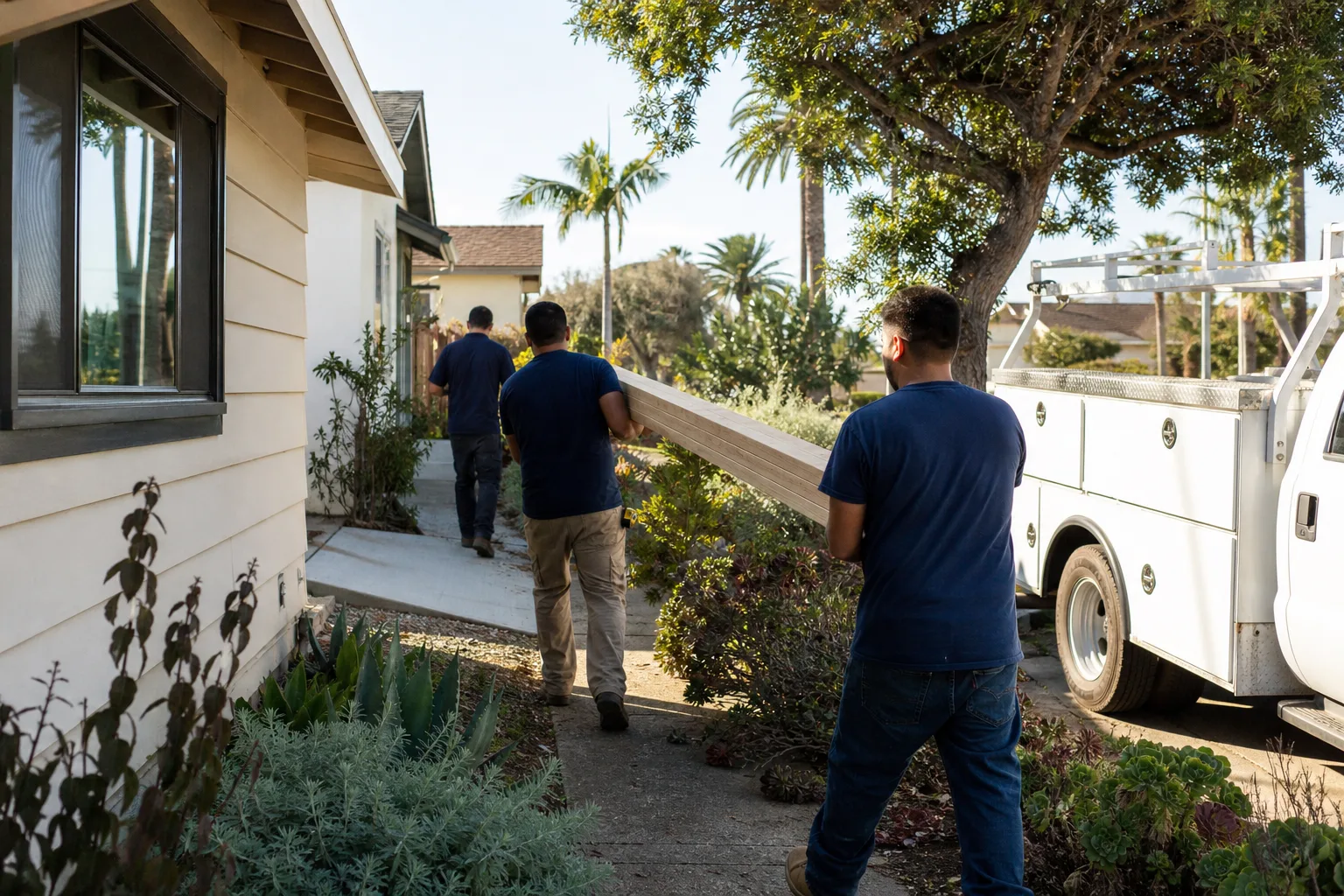
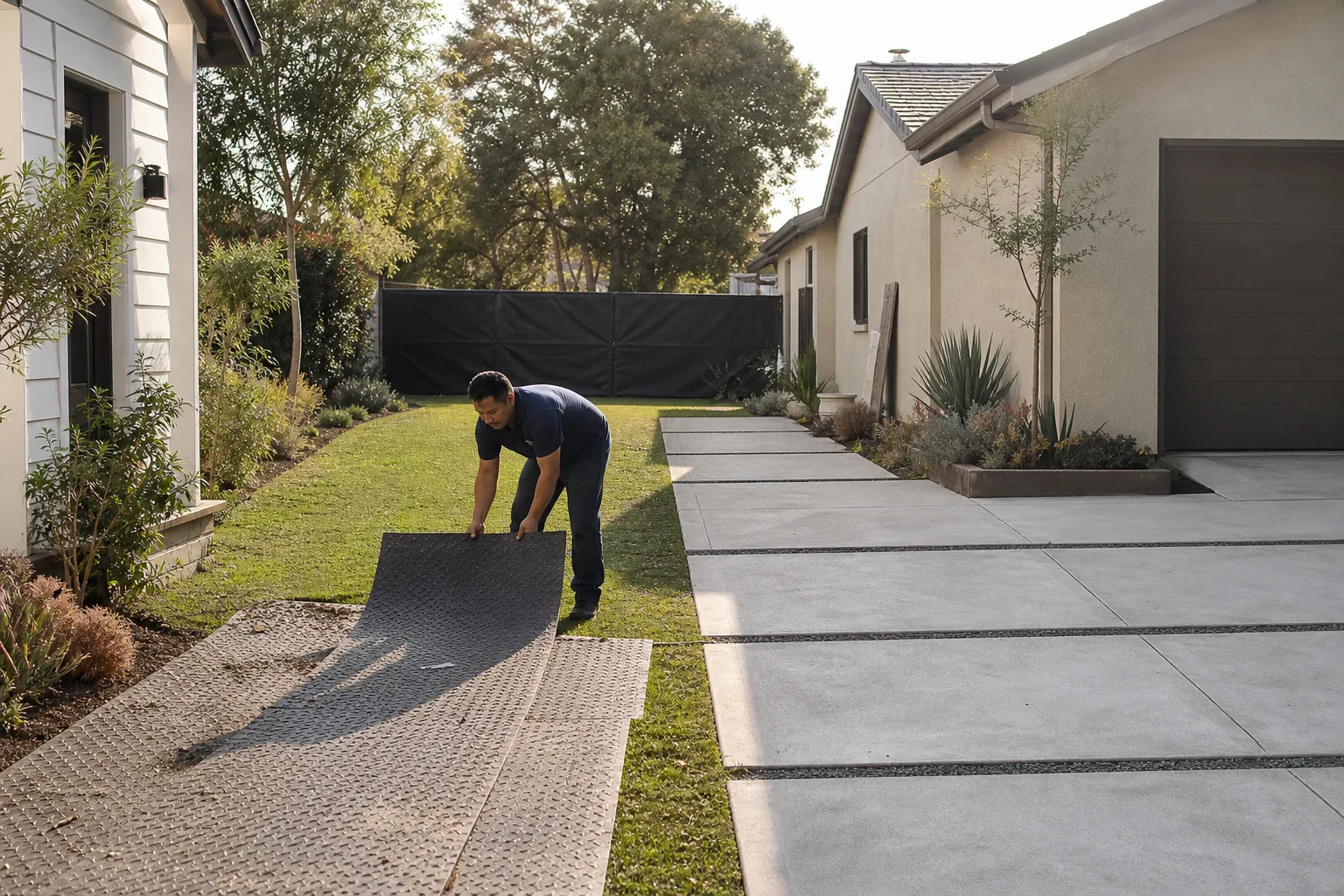
- Access for construction: Whether a backhoe, concrete truck, or prefab panel delivery can actually reach your backyard. Narrow side yards in neighborhoods like Old Towne Orange can limit options.
- Tree and easement conflicts: Protected oaks, city easements, and utility corridors that could affect where your ADU footprint can sit.
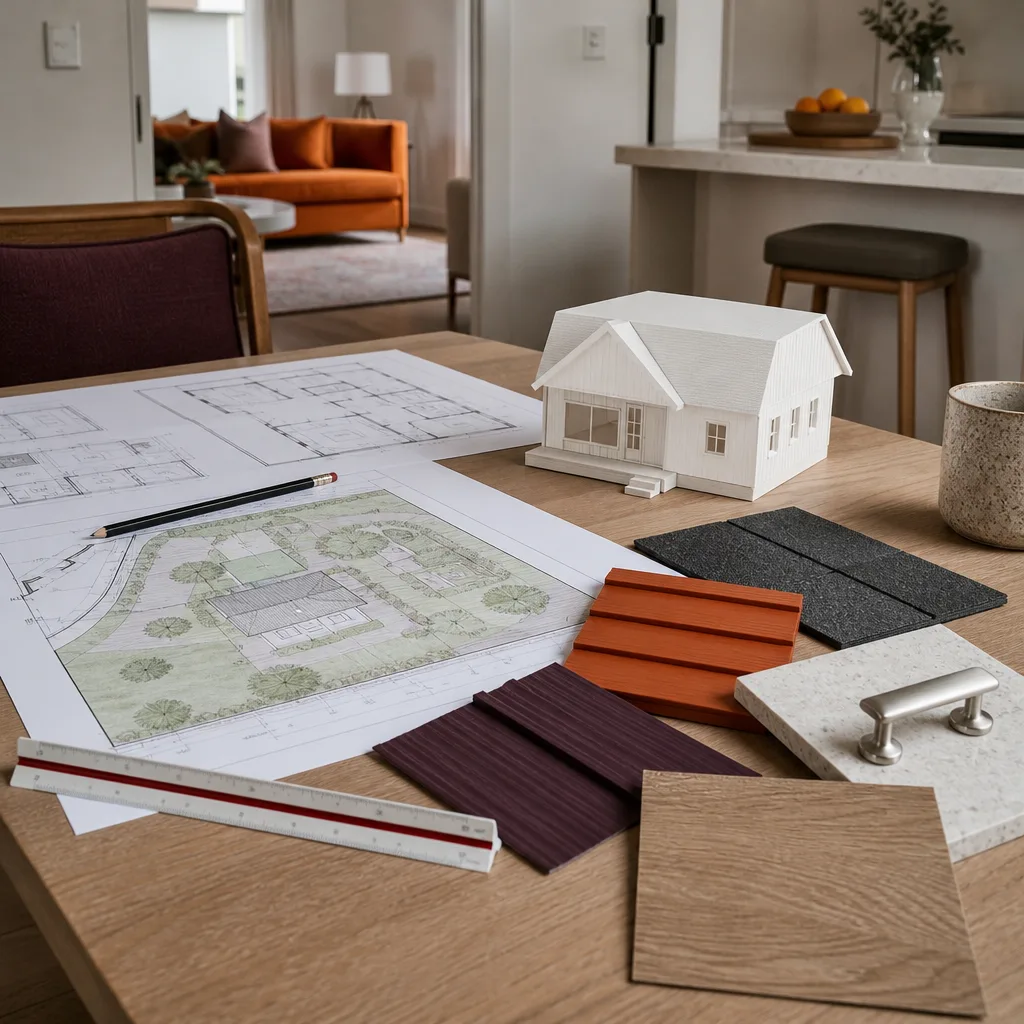
When You Need Site Assessment
Not every homeowner needs a formal assessment right away. But if any of these situations sound familiar, a site walk with a professional is the cheapest money you’ll spend on the whole project:
- You’ve been told different things by different contractors. One says you can build 1,200 square feet; another says 750. A written site assessment settles it with facts and code references, not optimism.
- Your lot is sloped, irregular, or has drainage issues. Hillside properties in Anaheim Hills or Silverado Canyon have real constraints that flat-lot rules don’t cover.
- You’re considering a garage conversion but aren’t sure if the existing slab and walls are salvageable. We inspect whether the existing structure can support the conversion or whether you’re looking at a teardown and rebuild.
- You want to compare a prefab ADU against a stick-built one. Brands like Abodu and Mighty Buildings have specific foundation, access, and utility requirements. We check whether your lot is a match before you fall in love with a catalog model.
- Your city has sent mixed messages about what’s allowed. Zoning overlays, historic district rules in places like San Juan Capistrano, and HOA restrictions all layer on top of state ADU law. We sort through what actually applies to your address.
- You’re budgeting for the entire project and need real numbers. A site assessment gives you a line-item range for site preparation, foundation, utilities, and permits, not a single vague figure.
How Much Does a Site Assessment Cost in Orange County?
Standalone site assessments in Orange County run $350 to $900 depending on lot complexity, city filing fees, and whether soil testing or survey work is needed. At Lodgewick, we quote the assessment as a fixed number before we step onto your property, never an hourly range that grows. If you proceed with design and permitting through us, the assessment fee is credited toward your project.
| Assessment Component | Typical Range | What It Covers |
|---|---|---|
| Basic site walkthrough | $350 – $500 | Visual inspection, setback measurements, access check, written summary for flat or gently sloped lots |
| Standard full assessment | $500 – $700 | Everything in basic, plus utility mapping, zoning verification with your city, drainage observations, ADU footprint options |
| Complex lot assessment | $700 – $900+ | Hillside or irregular lots, garage conversion structural review, soil testing coordination, surveyor involvement |
What changes the price: lot size and slope, whether you need a surveyor or soil engineer involved, your city’s specific review requirements, and whether the assessment includes a garage structure evaluation. We give you the number before we start, always. Call (350) 203-6060 for a fixed-price assessment quote on your property.
Our Site Assessment Process
We follow a clear process so you know exactly what’s happening and when to expect answers. No vague timelines, no disappearing acts.
- Scheduling and prep. You call (350) 203-6060, a live person answers, and we schedule a walkthrough at a time that works for you. Before we arrive, we pull your parcel’s current zoning and any recent permit history so we’re not starting from zero.
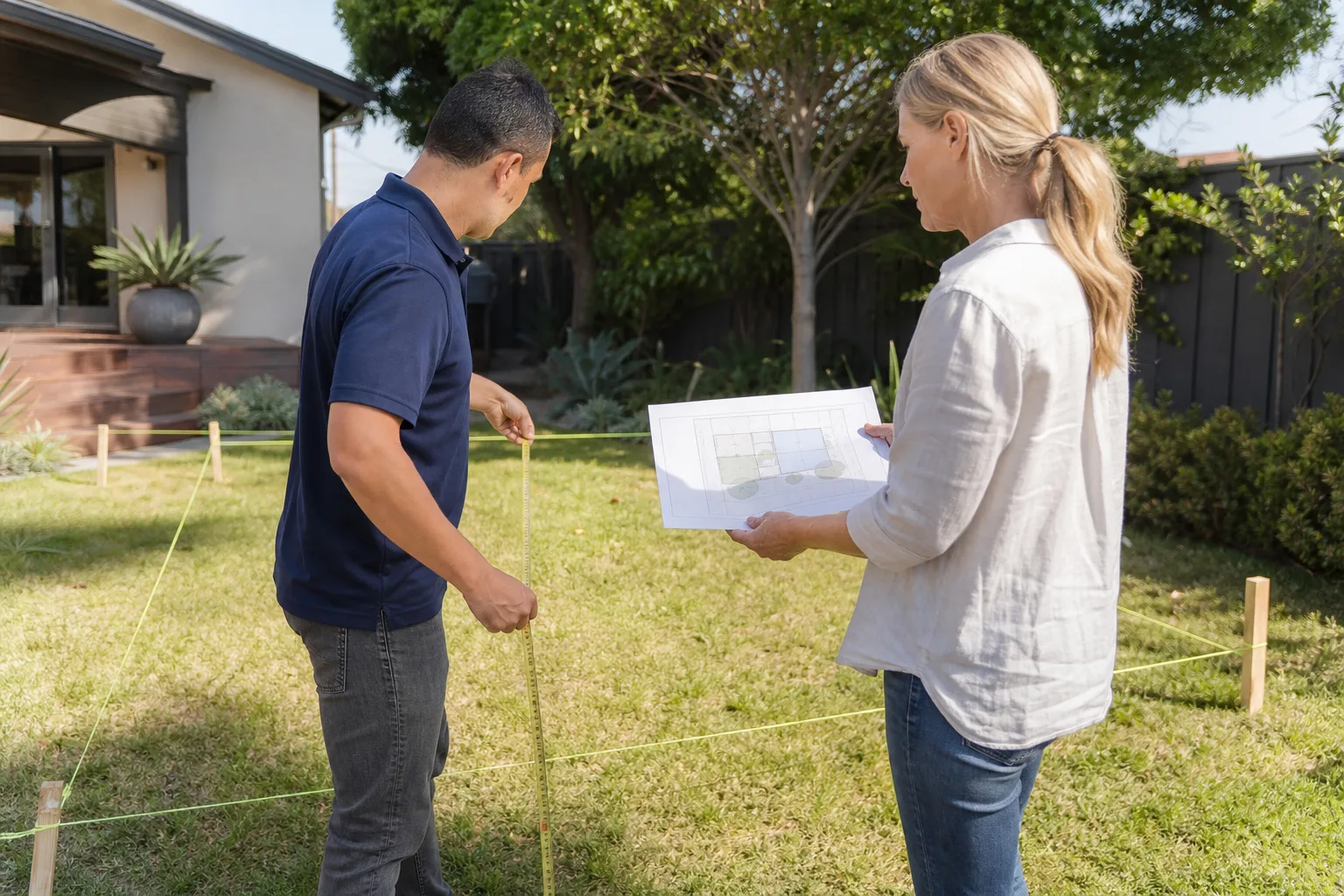
- On-site walkthrough. We measure setbacks, note slopes, check utility access points, evaluate soil visibly, and look at any existing structures you’re considering converting. If you’re weighing a garage conversion, we inspect the slab, framing, and roofline.
- Prefab feasibility check. If you’re considering a brand like Abodu, Cover, or Dvele, we check your lot against the manufacturer’s specific requirements for delivery access, foundation type, and utility tie-ins. Some prefab units need a crane, and not every Orange County backyard has the clearance.
- City-specific zoning verification. We confirm what your specific city will actually approve. State ADU law sets a baseline, but cities add their own rules on height, setbacks, parking, and historic district restrictions. We check the current ordinance for your address, not the general one.
- Written report delivery. Within 5 to 10 business days, you get a written report with your lot’s constraints, realistic ADU square footage, likely cost ranges for site work, and a list of any obstacles that need addressing before design starts.
- Design and budget conversation. We walk through the report with you and explain what it means for your budget and timeline. If you decide to move forward, the assessment fee rolls into your project cost.
Why Site Assessment Comes Before Design
Skipping the assessment is how a $150,000 ADU becomes a $220,000 ADU halfway through permitting. Here’s what we regularly see in Orange County when assessment gets skipped:
- Setback surprises: A homeowner pays for architectural plans only to learn the floor plan encroaches on a required side setback. The plans get redrawn, and the architect bills again. We catch this on day one.
- Utility capacity gaps: A sewer line that serves a 3-bedroom house may not legally serve a second dwelling without an upgrade. That’s a $5,000 to $15,000 fix depending on your city and lot. We identify it before plans are drawn.
- Prefab mismatches: Dvele and Mighty Buildings units have specific foundation and utility specifications. If your lot doesn’t match, you either pay for modifications or switch brands. We check compatibility during assessment, not after deposit.
- Access problems: A backyard ADU in a tight Costa Mesa or Huntington Beach lot may have zero room for construction equipment. We measure access during the walkthrough so the design accounts for it from the start.
We see failed projects where homeowners spent $5,000 to $8,000 on plans that had to be scrapped. A $500 assessment would have caught the problem before a single drawing was done. That’s the straightforward reason we put assessment first.
What Your Orange County City Will Actually Allow
California state law sets minimum ADU allowances, but Orange County cities layer their own requirements on top. Here’s what we check for during your assessment, specific to your city:
- Setback requirements: Most Orange County cities follow the state’s 4-foot side and rear setback rule for detached ADUs, but some, like older parts of Orange and Tustin, have narrower lots that create practical limits beyond the legal minimum.
- Height restrictions: Detached ADUs are typically capped at 16 feet, but a two-story ADU over a garage may reach higher if your city allows it. We verify what applies to your parcel.
- Parking rules: Many Orange County cities waive ADU parking requirements if you’re within a half-mile of public transit, but the exact distance and transit definitions vary by city. We check your address, not the brochure.
- Historic district overlays: If your home is in a designated historic area, like parts of San Juan Capistrano or Old Towne Orange, additional design review applies. We flag this during assessment so it doesn’t ambush you during permitting.
- HOA covenants: California law limits HOAs from outright banning ADUs, but they can impose design and parking rules. If your neighborhood has an HOA, we note which documents you’ll need to satisfy.
Prefab vs. Stick-Built: What Your Lot Tells Us
Orange County homeowners increasingly ask about prefab ADUs, and for good reason. Brands like Abodu, Cover, Dvele, and Mighty Buildings deliver quality units with faster timelines than traditional construction. But your lot dictates whether a prefab approach works at all, and which brand fits.
During the site assessment, we measure delivery access, check whether a crane has room to operate, verify foundation requirements, and confirm utility connection points. A lot in Irvine with a wide side yard and easy street access handles most prefab units without issue. A hillside backyard in Laguna Beach or a flag lot in Fullerton may require site work that changes the prefab math entirely.
We work hands-on with these manufacturers and their installation requirements, so the assessment gives you an honest compatibility check instead of a sales pitch. If your lot doesn’t suit a particular brand, we tell you that in the report and explain what would work instead.
The Kingswell Way on Every Assessment
We’re part of the Kingswell family of home-service companies, and our crews operate a specific way. We call it The Kingswell Way: say the price before the work, show up in the window given, leave the place cleaner than found, put the guarantee in writing, come back if it fails. On a site assessment, that means:
- Written price first: You know the assessment cost before we arrive. No surprise fees, no hourly billing that drifts upward.
- Real arrival window: We give you a defined time window and we honor it. If something changes, a live person calls you.
- Respect for your property: Our team is background-checked and uniformed, so you always know who’s on your property and why they’re there.
- Written report, not a verbal summary: You get your findings in writing, with specifics you can use to get competing bids or move forward with us.
- 365-Day Done Right Promise: If our assessment missed something material that a reasonable professional should have caught, we come back and make it right. This promise is in writing on every project, and there’s no fine print hoops. The name “Lodgewick” comes from a lodge being a small house on a larger property, which is exactly what an ADU is. That understanding shapes every assessment we do.
Common Lot Conditions We See in Orange County
After 15 years of assessing lots across the county, certain patterns show up repeatedly. Knowing what to expect helps you understand why a written assessment matters:
Flat Subdivision Lots
Places like Irvine, Aliso Viejo, and most of Mission Viejo have flat, regularly shaped lots with generous setbacks from the 1970s through 1990s. These are the most straightforward for ADUs. Standard assessments still catch utility issues and access constraints, but the site work is usually minimal.
Hillside and Canyon Lots
Anaheim Hills, parts of Yorba Linda, and canyon neighborhoods bring slope into the equation. Grading, retaining walls, and foundation engineering can add $15,000 to $40,000 to site preparation. We identify the slope percentage and drainage direction during the walkthrough so your budget reflects reality.
Older Neighborhoods with Tight Lots
Santa Ana, Fullerton, Garden Grove, and Anaheim have thousands of postwar lots in the 5,000 to 6,500 square-foot range. Side setbacks may be just 3 to 5 feet, and existing driveways and utilities often sit exactly where you’d want to build. We measure carefully and map out what fits.
Coastal and View Properties
Huntington Beach, Newport Beach, and Laguna Beach lots can have coastal zone regulations, height restrictions designed to protect views, and premium construction costs. We check whether your parcel falls under any coastal overlay during assessment.
What You Get in the Written Report
Your site assessment ends with a written report, not a phone call. Here’s what that document includes:
- Maximum buildable ADU square footage for your specific parcel, based on lot size, setbacks, and city ordinance.
- Recommended ADU placement with one or two footprint options drawn against your property boundaries.
- Utility connection plan noting where sewer, water, and electrical tie-ins exist and what upgrades may be required.
- Known obstacles including slope, drainage, trees, easements, historic overlays, and HOA requirements.
- Site preparation cost range for grading, foundation, utility connections, and access work specific to your lot.
- Prefab compatibility notes if you’ve expressed interest in Abodu, Cover, Dvele, Mighty Buildings, or another manufacturer.
- Next steps for design, permitting, and construction with realistic timelines for your city.
This report is yours to keep regardless of who you ultimately build with. We stand behind its accuracy with the 365-Day Done Right Promise in writing.
FAQs – Site Assessment
How long does a site assessment take in Orange County?
The on-site walkthrough itself usually takes 60 to 90 minutes, and you’ll receive your written report within 5 to 10 business days after the visit. We pull your parcel’s zoning and permit history before we arrive, so the time on your property is focused on measurements and observations, not document review. Call (350) 203-6060 to schedule a specific date and time window.
Is a site assessment required before building an ADU?
A formal site assessment isn’t legally required by Orange County or the state of California, but building without one is how budgets go sideways and plans get rejected. A $350 to $900 assessment regularly saves homeowners $5,000 to $20,000 in failed plans, utility surprises, and site prep changes. We recommend it as the first step on every project, and we credit the assessment fee toward your ADU design and permitting if you move forward with Lodgewick.
Can you assess my lot if I’m still deciding between an ADU and a garage conversion?
Yes, and that’s exactly the scenario our assessment handles best. We evaluate both options against your lot’s constraints: the existing garage slab and walls, the available backyard space, utility locations, and your city’s rules. You get a written comparison of buildable square footage, rough cost, and timeline for each path, so you can decide with real numbers instead of guesses. Call (350) 203-6060 and we’ll walk you through what applies to your property.
What if my site assessment finds a problem that makes an ADU impossible?
Rarely is a lot truly impossible for an ADU in Orange County, given how state law preempts many local restrictions. But when we uncover something significant, such as a sewer line that can’t legally serve a second unit or a slope that requires major engineering, we explain the issue and what it costs to fix. You get the full picture in writing, and you decide whether the investment makes sense. No pressure, no upsell, just straight information.
Does your assessment work for prefab ADUs from companies like Abodu or Dvele?
Yes. Our assessment includes a compatibility check against the specific requirements of prefab manufacturers including Abodu, Cover, Dvele, and Mighty Buildings. We measure delivery access, crane clearance, foundation compatibility, and utility connection points against each brand’s specifications. If your lot works for one prefab brand but not another, we tell you which and why in the written report.
Will I get a written price before you start the assessment?
Yes, always. Every site assessment includes a written price before we step onto your property, with no hourly billing and no price changes at the door. Your final cost is the number we agreed to in writing. If you proceed with design and permitting through Lodgewick, the assessment fee is credited to your project. Call (350) 203-6060 for a fixed written quote.
Call Lodgewick ADU Orange County for Your Site Assessment
If you’re considering an ADU, garage conversion, or home addition in Orange County, the cheapest mistake-prevention you’ll ever buy is a thorough site assessment. At Lodgewick, you get a written price before we start, a real arrival window, a written report you keep, and the 365-Day Done Right Promise behind everything we find. No vague estimates, no pressure, no disappearing acts. Call (350) 203-6060 today and talk to a live person about your lot. If you’re still exploring, start with our ADU Design & Permitting in Orange County page or head back to our home page to see how we work.
Written by Russ Delmar, Owner at Lodgewick ADU Orange County, serving Orange County.