Plant Prefab Site Prep & Utilities: The Orange County Owner’s Guide
Site prep and utility work for a Plant Prefab unit in Orange County typically runs $18,000 to $55,000 installed, and we stock the materials and coordinate the trades to get it done without the usual runaround. Most owners discover something’s wrong when their prefab delivery date is approaching and the pad isn’t ready, the sewer lateral won’t pass inspection, or the electrical service can’t handle the panel upgrade the unit requires. You’re not alone if you’re reading this two weeks out from delivery feeling like the ground under you shifted literally and figuratively.
We’re Lodgewick ADU Orange County, and while we’re an independent service provider not affiliated with Plant Prefab, we’ve prepped more Plant Prefab sites across Orange County than most crews have poured slabs, period. If you’re holding a failed inspection report or staring at a utility trench that’s now a swimming pool after a Santa Ana rain, this page tells you exactly what’s involved, what it costs, and what your options are. Call (350) 203-6060 for a free estimate.
Key Takeaways:
- Site prep and utility work for Plant Prefab units in Orange County typically costs $18,000 – $55,000, depending on lot conditions, trenching depth, and utility availability.
- We provide a written price before any work starts, under The Kingswell Guarantee, with a 365-Day Done Right Promise on every project.
- Plant Prefab units have specific utility stub-out requirements that differ from other prefab manufacturers like Abodu, Cover, and Dvele. Matching those specs matters.
- Failed site prep usually shows up as drainage problems, utility conflicts, or pad elevation issues. These are fixable without scrapping the whole project.
Which Plant Prefab Models This Applies To
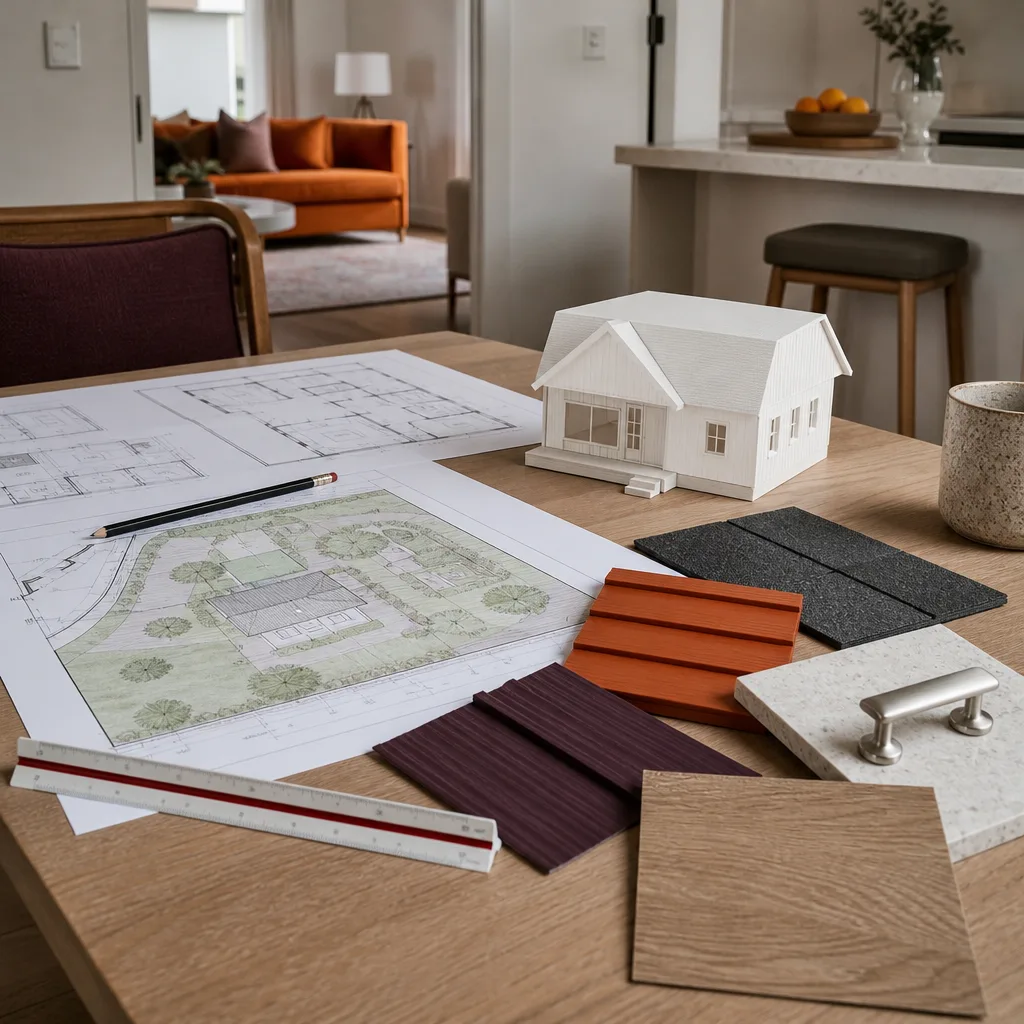
Plant Prefab builds several model lines, and the site prep and utility requirements vary between them. The LivingHome series, including the C6, C10, and custom configurations, is what most Orange County homeowners order. These units arrive in modules that get craned onto a foundation, so the foundation, utility stubs, and anchor points have to be within the manufacturer’s specified tolerance. The panelized options from Plant Prefab have different needs, because they arrive as wall, floor, and roof panels that get assembled on-site rather than dropped as finished modules. If you’re not sure which one you have, check the order documents from Plant Prefab. The model designation and series number are on the first page of the sales contract and also on the structural drawings.
The compatibility gotcha with Plant Prefab specifically is that their utility stub-out locations are engineered to the module layout, not to your existing house. That means the sewer lateral often has to run a longer path than you’d expect, and the electrical service entrance needs to land within a few feet of where Plant Prefab’s drawings specify. We’ve seen owners pour a pad and run conduit based on where they thought utilities would land, and then the Plant Prefab drawings show a stub-out location eight feet away. Measuring against the actual Plant Prefab foundation plan, not a generic ADU plan, is the difference between a clean install and a concrete saw rental.
When it comes to OEM versus aftermarket for site prep and utilities, this isn’t really a parts-swap situation like a water heater or a garage door spring. The “parts” here are the foundation, drainage, sewer, water, and electrical infrastructure. Plant Prefab doesn’t sell their own sewer laterals or panels. The quality decision comes down to the materials and methods your contractor uses, and the specs Plant Prefab requires. We use materials that meet or exceed Orange County building code and Plant Prefab’s installation requirements, and we match the load calculations to the unit’s actual weight and point-load anchors. A generic ADU foundation won’t always transfer point loads where Plant Prefab needs them, which is a specific failure we’ve corrected on more than one Orange County job.
Signs Your Plant Prefab Site Prep & Utilities Is Failing
- Standing water or soft spots on the pad area – This usually means the base compaction was done wrong or the drainage layer is missing. In Orange County’s clay-heavy soils, water sits instead of percolating, and a wet base under a Plant Prefab module will settle unevenly. We find this most often on fill lots in places like Lake Forest and Mission Viejo where expansive soils didn’t get proper treatment before the pad went in.
- A foundation that’s out of level by more than a quarter inch – Plant Prefab modules will tolerate very little variation. If the pad was poured low on one corner, the module won’t sit right, and the interior door frames will bind. This comes from someone skipping the form survey or pouring in the rain, and it’s the number one reason we get called in after someone else’s pad failed.
- Sewer lateral that won’t hold a test – If the Orange County city inspector fails your sewer lateral pressure test, there’s a crack or a bad glue joint somewhere underground. Plant Prefab units need clean, properly sloped laterals, and the root intrusion we see in older Orange County neighborhoods like Orange and Santa Ana can make a lateral fail repeatedly until it’s sleeved or replaced.
- Electrical service that trips when the module first gets powered – This almost always points to an undersized panel or a ground fault in the underground feed. Plant Prefab units draw a specific load based on the mechanical and appliance package, and a 100-amp panel that was “good enough” for a shed won’t handle a full LivingHome. We’ve diagnosed this in the Anaheim Hills neighborhoods where Russ Delmar and our crew work often, and the fix is usually a panel upgrade plus correcting the feeder run.
- Cracks radiating from the anchor bolts or hold-downs – When the anchor bolts were set in the wrong location and someone tried to move them after the fact, or when the hold-downs weren’t embedded to the engineer’s depth, the concrete cracks around the load transfer points. This is a structural issue, not a cosmetic one, and it needs an engineer’s review and repair before the Plant Prefab module gets set.
Replacement Cost & What’s Included
For site prep and utility work on a Plant Prefab project in Orange County, most homeowners can expect:
- Foundation repair or re-pour: $8,000 – $22,000, depending on whether it’s a partial fix or a full replacement, concrete thickness, and rebar schedule.
- Sewer lateral replacement or repair: $3,500 – $9,000, driven by trench depth, length to the city main, and whether we’re dealing with root intrusion or old Orange County clay pipe that’s collapsed.
- Electrical service upgrade to 200 amps: $4,000 – $8,500, covering panel, feeder, grounding, and coordination with Southern California Edison where the utility connection requires their crew.
- Water line and drainage corrections: $2,500 – $7,000, including trenching, pipe sizing, and backflow prevention where the city requires it.
What drives the range in Orange County is the lot itself: slope, soil type, utility depth, and city-specific permit requirements. Garden Grove, Fullerton, and Westminster each have slightly different inspection protocols, and unincorporated Orange County can be different again. Every price we give is a written line-item quote before work starts. No change orders at the door. No “we found something” surprises. The Kingswell Guarantee means the price we put in writing is the price you pay, and the 365-Day Done Right Promise covers the work in writing. If something on the site prep or utility work fails within a year, we come back and fix it, free of charge.
DIY or Call Us?
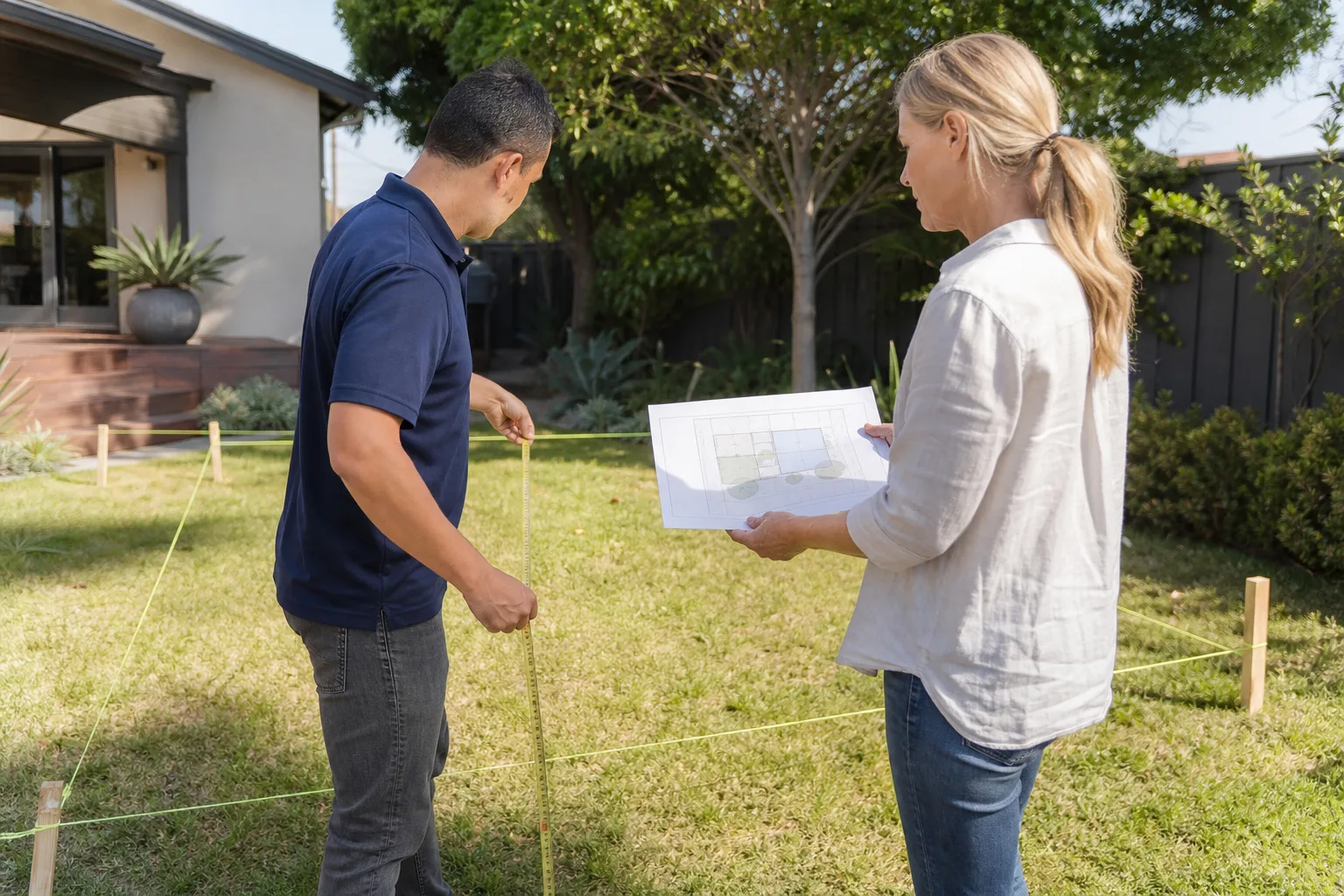
There are things you can check yourself, and there are things you should not touch. You can safely verify pad elevation with a laser level, check whether the site drains after a rain, and confirm that the utility stub locations match the Plant Prefab foundation plan. That last one is worth doing before anyone pours anything, because catching a wrong stub location early saves thousands. What you should not do is attempt to repair a sewer lateral, move anchor bolts in cured concrete, or add circuits to your electrical panel to accommodate a Plant Prefab load. Underground utilities and electrical service work carry real safety risks, including electrocution and trench collapse. This is not a place for a motivated weekend with a rented trencher. Trench shoring, proper grounding, and pressure testing are professional work, and Orange County inspectors will fail work that doesn’t meet code regardless of how much effort went into it.
If the site prep or utilities on your Plant Prefab project are not where they need to be, call us at (350) 203-6060. We’ll come look, tell you what’s actually wrong, and hand you a written price. No charge for the estimate.
FAQs
A properly built foundation and utility installation should last the life of the structure, which for a Plant Prefab unit is 50 years or more. What shortens that lifespan in Orange County is expansive clay soil, root intrusion into older sewer lines, and the occasional seismic movement that tests your anchor embedments. Our 365-Day Done Right Promise covers the first year, and the work itself is built to the Orange County engineering standard for permanent ADU construction. Call (350) 203-6060 if you want a current condition assessment.
In many cases, yes. A low corner on a pad can be corrected with a properly engineered overlay or a localized repair if the structural engineer signs off. A sewer lateral with one bad joint can be spot-repaired, though we often find that once you’re trenching, replacing the whole run with new ABS is smarter money. The decision depends on what the inspection report says and what’s in the ground. We’ll tell you the honest answer, not the convenient one.
Most foundation repairs take three to seven working days. Sewer lateral replacement is usually two to four days, depending on trench length and city inspection timing. An electrical panel upgrade runs one to three days, plus whatever time Southern California Edison needs to coordinate their side. Call (350) 203-6060 and we’ll walk through the actual timeline for your specific situation.
We keep the common materials on hand: ABS pipe and fittings, concrete form hardware, anchor bolts and hold-downs, electrical panels and feeders, and the drainage components most Plant Prefab sites need. For specialty items like engineered fill, we schedule delivery for your specific pour date. Unlike a plumbing parts counter, the “part” here is the whole underground and foundation system, and we’ve built enough of them in Orange County to know what to have ready before we start the clock on your build.
Written by Russ Delmar, Owner, Lodgewick ADU Orange County at Lodgewick ADU Orange County, serving Orange County and nearby areas.