Tuff Shed Site Prep & Utilities: The Orange County Owner’s Guide
Site prep and utilities for a Tuff Shed in Orange County typically runs $1,800 to $6,500 installed, depending on whether you need a simple gravel pad, a full concrete slab with electrical, or something in between. Most owners discover site prep problems the hard way: the shed doors start binding, water pools at the low corner, or the electrical never worked quite right from day one. We stock and install Tuff Shed-compatible site prep materials and utility hookups, and we can usually diagnose a failing foundation or utility line within one visit.
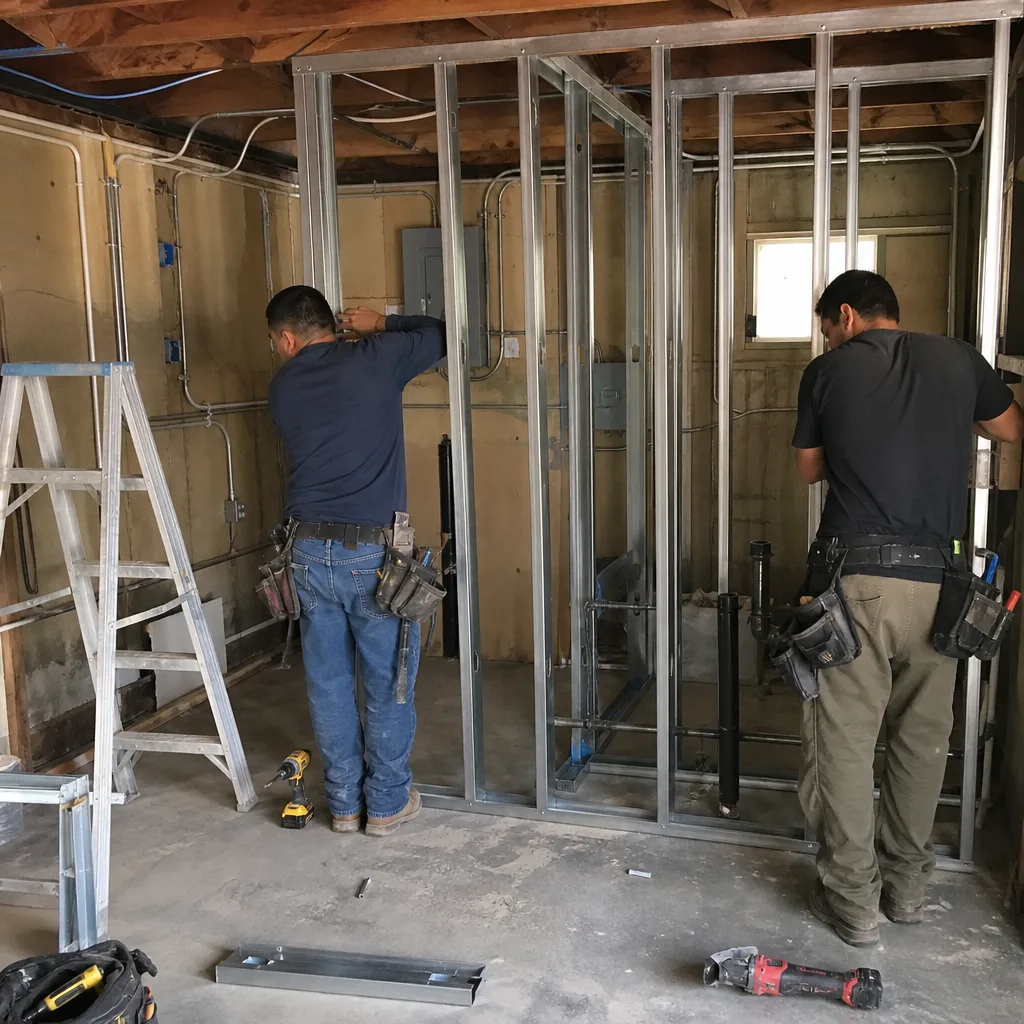
Here’s the honest picture: a Tuff Shed is only as good as what sits under it. The shed itself is built to consistent specs at the factory, but the ground it lands on is entirely local. Orange County has expansive clay soils in pockets from Anaheim Hills to Yorba Linda, and that soil moves. When it moves, pads crack, sheds shift, and doors stop lining up. The utilities are the second piece: most Tuff Sheds get a basic 20-amp circuit, and that’s fine for a light and a charger until someone plugs in a table saw or a small AC unit and the breaker trips constantly. We see both of these failure patterns regularly, and both are fixable the first time when the site prep is done right.
Which Tuff Shed Models This Applies To
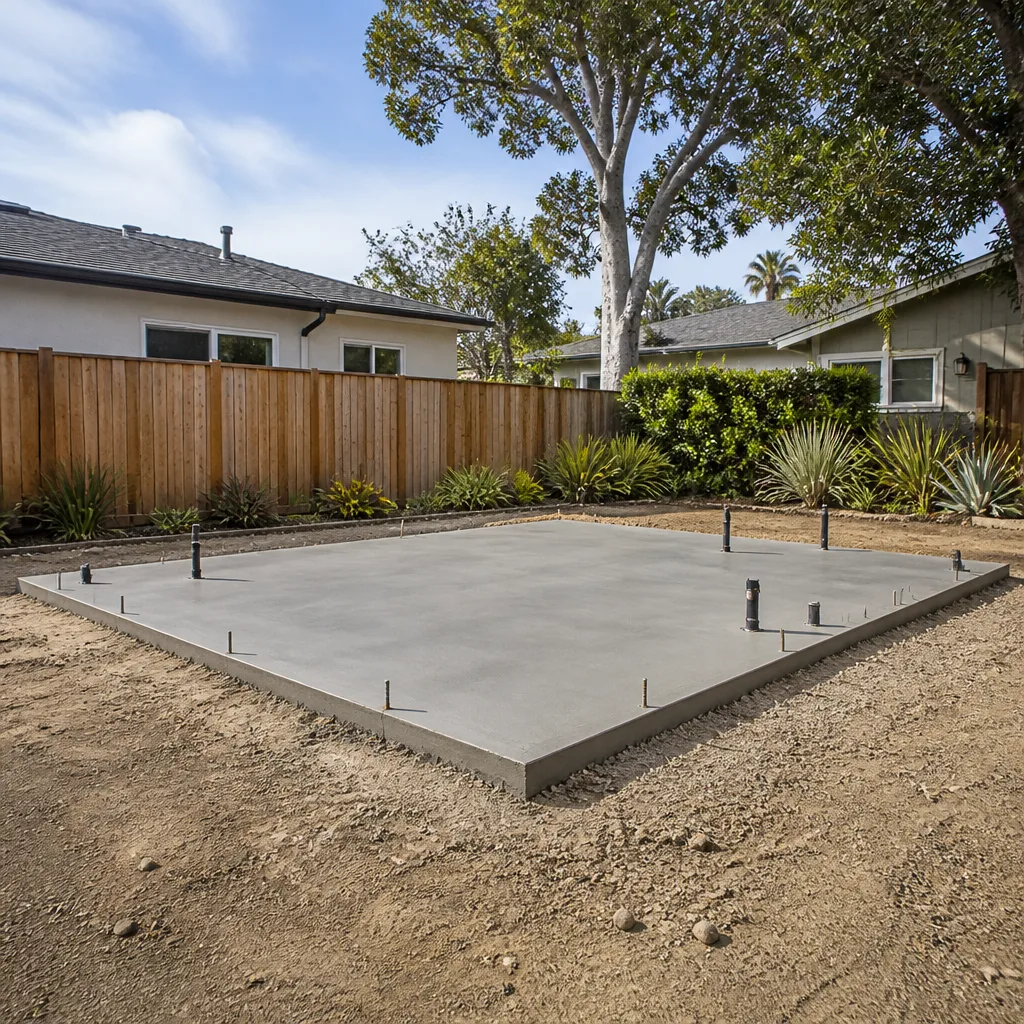
Site prep and utility needs vary by Tuff Shed line, and the differences matter more than most owners expect. The Premier PRO Series and Premier Ranch models are the heaviest and benefit most from a proper poured concrete slab with a thickened edge, because their floor systems and door frames sit directly on the slab. The Sundance Series and Garden Sheds are lighter and can sit comfortably on a compacted gravel pad or a simple treated-lumber foundation, but they still need the pad to be level within about a quarter inch over ten feet. The Barn Series with extra-tall walls catches more wind, so anchor depth matters; in Orange County’s Santa Ana wind season, a shallow anchor is a real liability.
The quickest way to identify what your shed needs is to check the model label on the inside of the door frame. The serial number and series name are printed there. If the label is gone, measure the shed’s footprint and note whether the floor is wood-joisted or slab-on-grade. That tells us what the structure was designed to sit on. When it comes to parts, Tuff Shed’s OEM site prep components, like anchor brackets and floor joist hangers, are solid but often backordered. We regularly use quality aftermarket equivalents that meet or exceed the same specs, and we’ll show you the difference in writing before we order anything. We are an independent service provider, not affiliated with Tuff Shed, so our job is to match the right part to your shed and your lot, not to push a particular brand.
Signs Your Tuff Shed Site Prep & Utilities Are Failing
- Doors that bind, drag, or won’t latch. This is usually the shed settling unevenly because the pad or foundation has shifted. One corner drops a half inch, the frame twists slightly, and suddenly the door only closes when you lift the handle just right.
- Water pooling at one corner or seeping under the wall plate. Orange County’s winter rains will find any low spot in your site prep fast. If the pad slopes toward the shed instead of away from it, water sits against the sill plate and starts working on the lumber.
- Visible cracks in a concrete slab, especially diagonal cracks from corners. Small hairline cracks are normal; any crack you can fit a dime into is not. Diagonal cracks from a corner usually mean the sub-base wasn’t properly compacted or the soil below has expanded.
- Circuit breaker trips every time you use a power tool or space heater in the shed. The original 20-amp circuit on your Tuff Shed was never sized for a real workload. If the wiring is undersized, upgrading the circuit and sometimes the panel tap solves this in an afternoon.
- Anchor bolts pulling loose or shed shifting slightly in high winds. In Santa Ana conditions, this is the one that worries me most. A shed that rocks in the wind isn’t secured, and a few seasons of that will rack the walls permanently.
Replacement Cost & What’s Included
Here are honest installed price ranges for Orange County, and they’re the same numbers we’ll put in writing before any work starts:
- Compacted gravel pad with treated lumber perimeter: $1,800 to $3,200 depending on shed size and access.
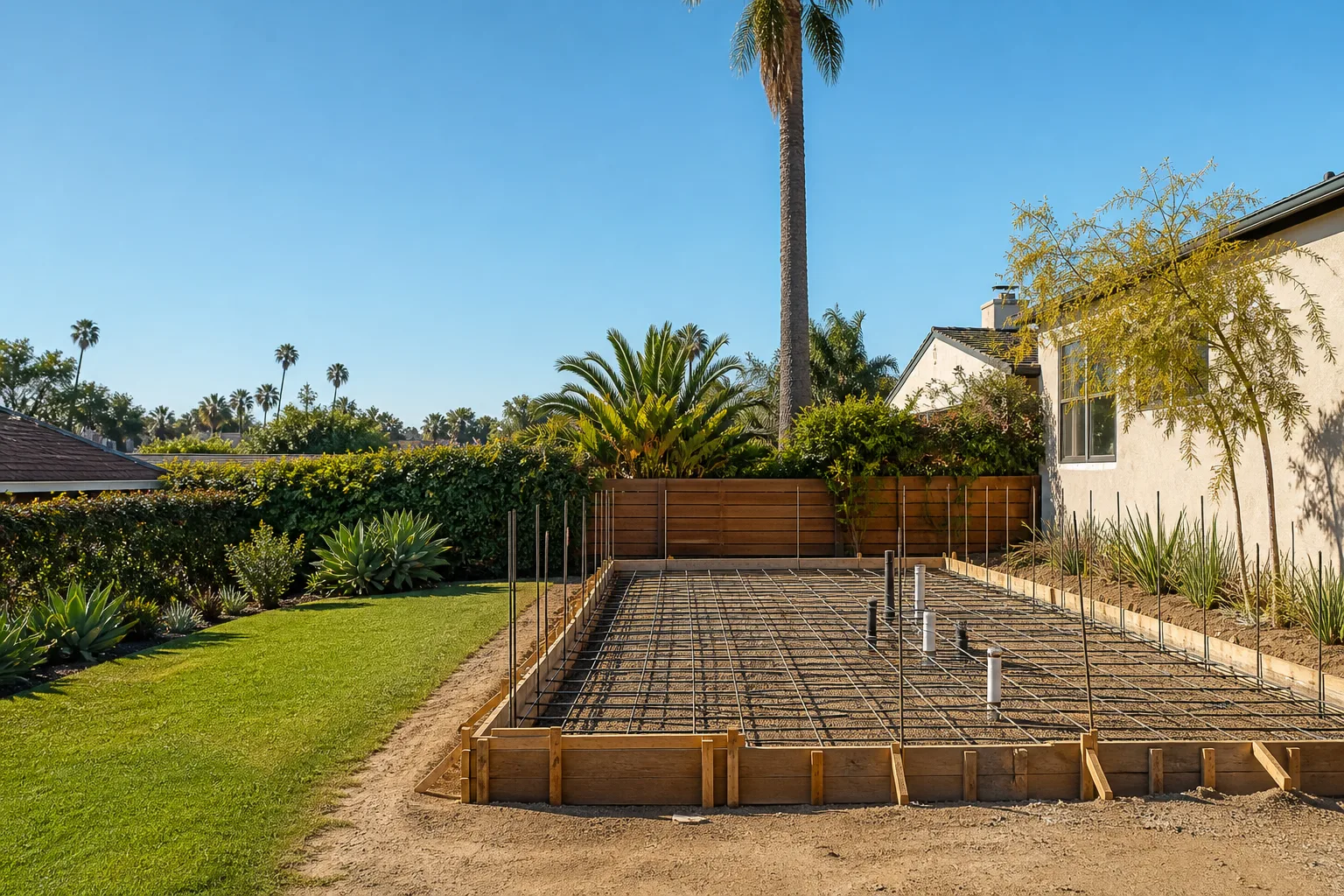
- Concrete slab with thickened edge, standard 8’×12′ to 10’×14′ footprint: $3,400 to $5,800, including rebar or mesh and finishing.
- Unpermitted electrical only (existing shed, adding or upgrading a circuit): $600 to $1,400, depending on wire run length and panel capacity.
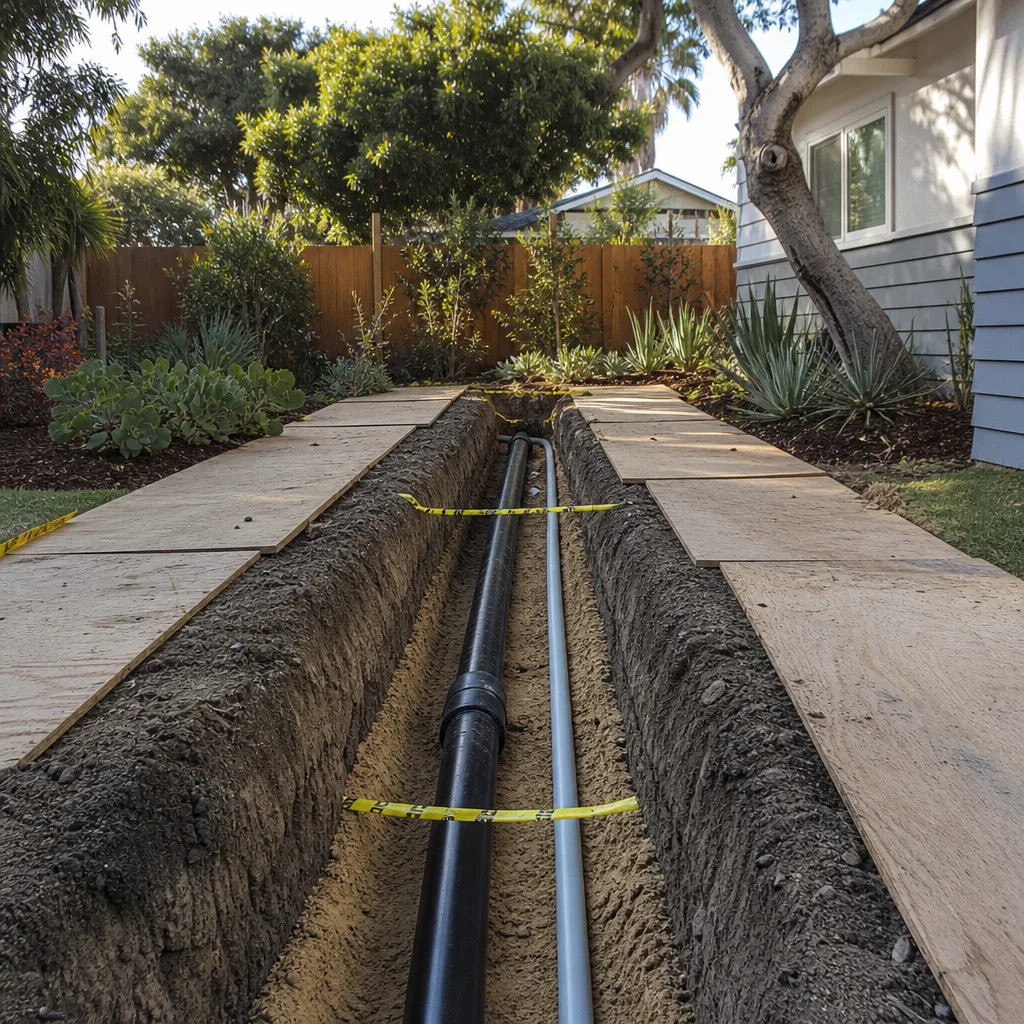
- Full permitted utility package (electrical, simple water stub, drainage): $2,500 to $6,500, with the permit pulled and the county inspection passed.
What changes the price is mostly access: if we can get a concrete truck to the pad location, the cost stays low. If the pour is in a tight backyard in Costa Mesa or a hillside lot in Anaheim Hills where we’re pumping concrete through a hose, it costs more. Every quote includes materials, labor, and a written guarantee under The Kingswell Guarantee, which means the price we give you before work starts is the price you pay when it’s done.
DIY or Call Us?
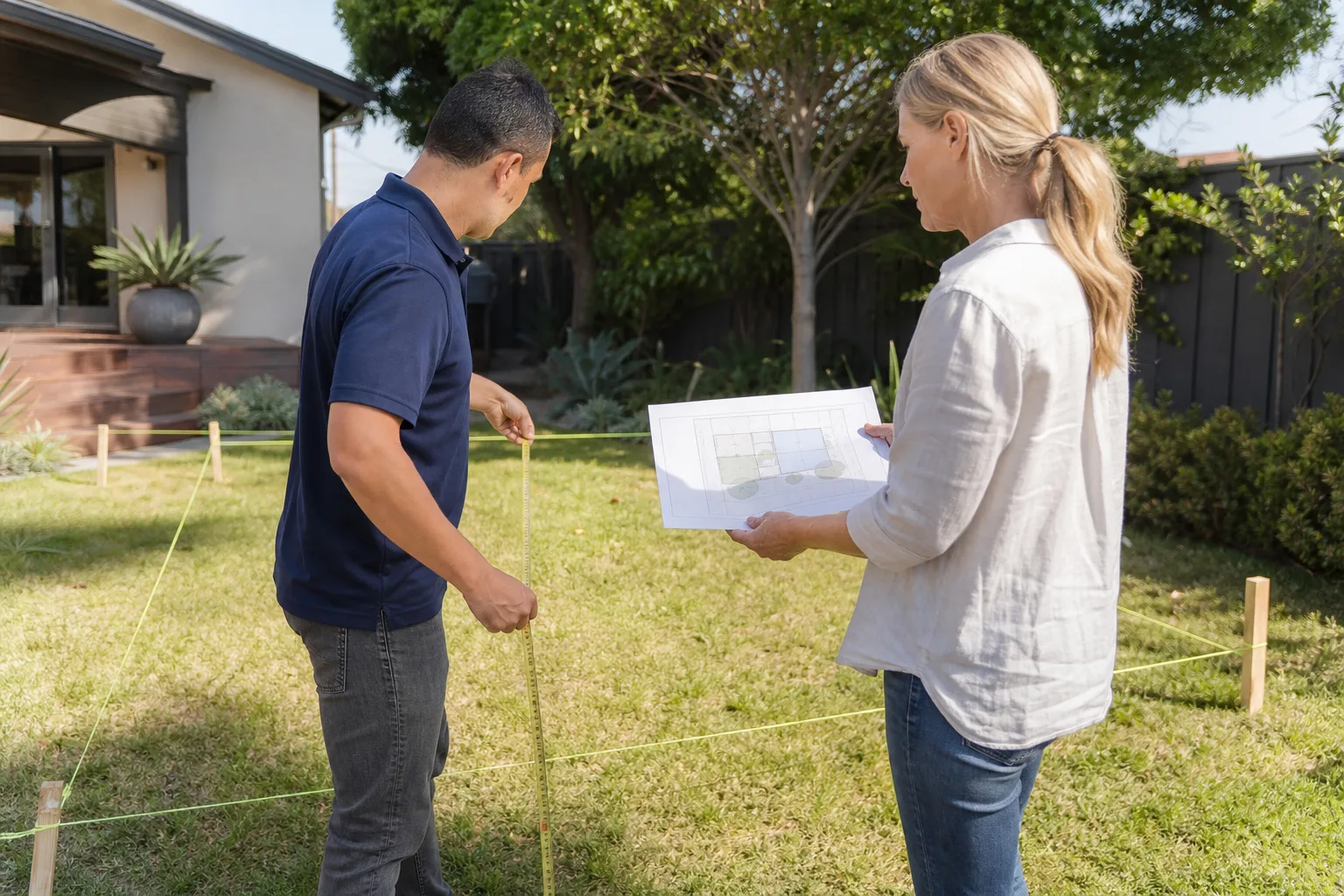
There are a few things worth checking yourself. Walk the pad after rain and mark any low spots with chalk. Look at the door gap at the top and bottom when the door is closed, it should be even. Test every outlet in the shed with a simple plug tester from the hardware store, they’re about ten bucks. If all that checks out, your site prep is probably fine.
Where DIY goes wrong fast is concrete. A slab that’s a half inch out of level is a door problem; a slab that’s two inches out is a tear-out. And on the electrical side, Orange County enforces the National Electrical Code, and a homeowner-installed circuit that wasn’t permitted will get flagged if you ever sell the property. That’s a costly conversation at escrow. If any part of this feels like more than you want to take on, call us at (350) 203-6060. We’ll look at the site, hand you a written price, and let you decide.
FAQs
A properly installed concrete slab in Orange County lasts 25 to 40 years, while a compacted gravel pad typically needs re-leveling every 5 to 8 years depending on drainage and soil movement. The difference is mostly sub-base preparation: we excavate, compact, and add a minimum 4-inch aggregate base before any concrete goes down. Call (350) 203-6060 if you’d like us to assess your existing slab’s condition.
Yes, hairline cracks can be sealed and minor settlement can sometimes be corrected with slab jacking, but a slab that has cracked more than a quarter inch or shifted out of level typically needs partial or full replacement. We’ll give you a straight repair-vs-replace recommendation in writing before you spend a dollar. Estimates are free at (350) 203-6060.
Most gravel pads and utility upgrades take one to two days on site, a concrete slab takes two to three days including cure time for the forms, and a permitted electrical package takes three to five days including county inspection scheduling. The Kingswell Guarantee means you get a defined arrival window before we start, not a vague “sometime this week.”
We stock the common components: anchor brackets, floor joist hangers, sill plates, conduit, boxes, and breakers for standard Tuff Shed configurations. For OEM Tuff Shed specific hardware with a lead time, we’ll quote you the real timeline and the aftermarket equivalent price so you can choose. We also work with Abodu, Cover, and Dvele systems on the same lots, so if your shed is part of a larger backyard plan, we can coordinate it.
Tell me what you need the space to do, and we’ll figure out the honest way to get there. Call (350) 203-6060 for a free site prep and utilities estimate in Orange County. A live person answers, and you’ll have a written price before we touch anything.
Written by Russ Delmar, Owner, Lodgewick ADU Orange County at Lodgewick ADU Orange County, serving Orange County and nearby areas.