Last updated October 15, 2026
How to Hire a ADU Contractor in Orange County: A Step-by-Step Guide
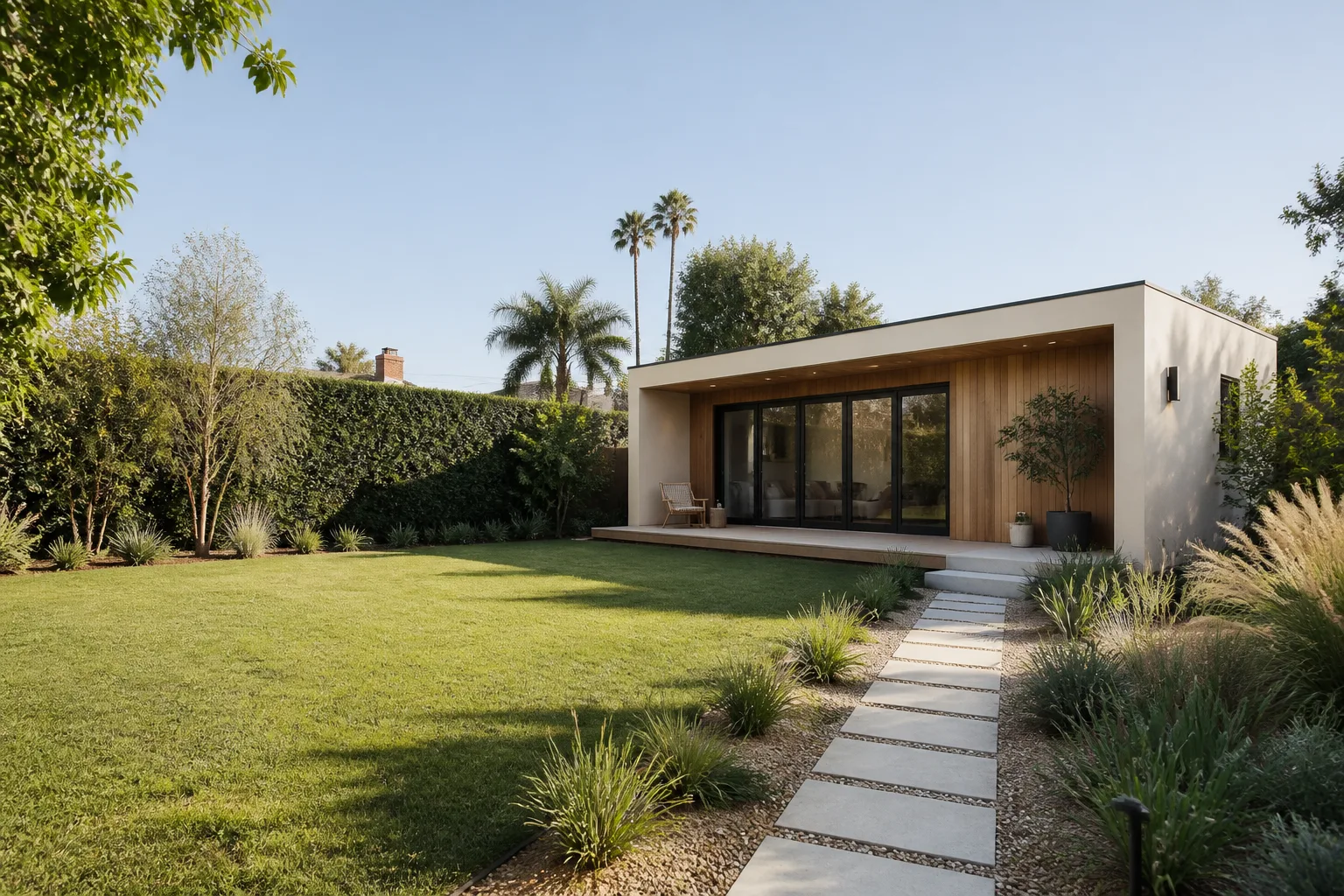
The most common hiring mistake Orange County homeowners make isn’t choosing a bad contractor. It’s choosing a good general remodeler who has never pulled an ADU permit and plans to learn on your project. An accessory dwelling unit, or ADU, is a second, fully independent living space on your existing lot. It has its own kitchen, bathroom, entrance, and address. Building one in Orange County means navigating a specific set of state laws, city-level codes, and financing realities that a kitchen remodeler simply never touches. For a deeper look at those codes, see our guide to ADU Permits, Codes & Inspections in CA: What You Need to Know. This guide walks you through how to vet an ADU contractor in Orange County before you sign anything, what a legitimate written price looks like, and the questions that separate a specialist from someone hoping you won’t know the difference.
Quick Answer
To hire an ADU contractor in Orange County, verify the contractor holds an active California B-General Building license on the CSLB website, then ask for their ADU permit history in your specific city. Require a written price commitment before any work starts, confirm the warranty language is in the proposal itself, and check that the contractor has built the specific type of ADU you want, whether that is a detached unit, garage conversion, or JADU. We recommend starting with a phone call where you ask the five screening questions listed below.
Table of Contents
- Step 1: Verify the License and Check the CSLB Record
- Step 2: The Five-Question Phone Script That Reveals ADU Experience
- Step 3: How to Read a Contractor’s ADU Permit History
- Step 4: Written Price vs. Estimate: The $15K to $40K Difference
- Step 5: Three Red Flags in an Orange County ADU Proposal
- Step 6: Materials and Prefab Brands: What Your Contractor Should Know
- Step 7: Financing, Timeline, and What Actually Drives ADU Cost in Orange County
- Common Mistakes to Avoid
- When to Call a Professional
- Frequently Asked Questions
- The Bottom Line
Step 1: Verify the License and Check the CSLB Record
Every ADU contractor in Orange County must hold a valid California contractor’s license. The type matters more than most homeowners realize. Here are the three license classifications that can legally build an ADU in California, and what each one means for your project.
The Three License Types That Can Build an ADU
- B-General Building Contractor: This is the license most ADU specialists hold. A B license allows the contractor to frame, roof, pour concrete, and coordinate the specialty trades. What it does not allow, by itself, is electrical, plumbing, or HVAC work. Those require either a C-10, C-16, or C-20 subcontractor or a contractor who holds those additional classifications. When you hire a B-General contractor for an ADU in Orange County, ask which specific subcontractors they use for electrical and plumbing, and whether those subs are listed on the CSLB as active license holders too.
- C-Class Specialty Contractors: A C-5 framing contractor or C-6 cabinet contractor can work on an ADU, but they cannot be the prime contractor on a full build. If a contractor tells you they can build your entire ADU on a C-class license, that is a red flag.
- Combined B with C-Classifications: Some Orange County ADU contractors hold a B license plus specific C classifications. This means they can pull the main permit and perform some specialty trades in-house. It’s a plus, not a requirement.
How to Verify in Under Three Minutes
- Go to the Contractors State License Board website at cslb.ca.gov.
- Click “Check a License” and enter the contractor’s license number or business name.
- Confirm the license status says “Active” and the expiration date is in the future.
- Look at the “Classification” field. Confirm it says B-General Building, B with C classifications, or a combination that matches what the contractor claimed.
- Scroll down to the “Workers’ Comp” section. If the contractor has employees, they must carry workers’ compensation insurance. If they claim to be a sole proprietor with no employees, that’s legal, but it means every person on your job site is a subcontractor. Ask for the certificate of insurance for each sub.
- Check the “Bonding” section. A $15,000 contractor’s bond is the legal minimum. A higher bond or an additional bond rider is a good signal but not a requirement.
In our experience reviewing contractor records for Orange County homeowners, the two most common issues we see are an expired license the contractor hasn’t renewed, and a contractor who lists a B license but has active complaints in the CSLB’s “Arbitration and Legal Action” section. The CSLB website shows those complaints. Read them. A single dispute ten years ago is normal. Three disputes in the last two years is not.
Step 2: The Five-Question Phone Script That Reveals ADU Experience
You can learn more in ten minutes on the phone than in an hour at a showroom. The goal is not to get a price. The goal is to hear whether the contractor answers like someone who has pulled ADU permits in your city, or like someone who is trying to sound confident while figuring it out live. Here is the script we recommend. Read it before you dial.
The Script
- “What cities in Orange County have you pulled ADU permits in during the last two years?” A real ADU contractor will answer immediately with city names: Santa Ana, Anaheim, Fullerton, Huntington Beach, Irvine, Orange, Garden Grove, Costa Mesa. Many will name the exact planning counter staff or the city’s current ADU checklist. A general remodeler will pause and say something vague like “all over the county.” Push for specific cities. Orange County has 34 distinct municipalities, each with its own ADU ordinance, planning department, and permit process. A contractor who has built ADUs in Irvine but never in Fullerton knows the difference, and will say so.
- “What is the rough price per square foot for a detached ADU in my city right now?” In Orange County, a site-built detached ADU typically runs $250 to $450 per square foot, not including site work, utilities, or design. A 400-square-foot garage conversion often lands between $120,000 and $180,000 all-in. A contractor who quotes below $150 per square foot for a detached build is either setting up a change order later or has never priced one. A contractor who refuses to give any range at all, even a rough one, is not treating you like a serious buyer.
- “Can you walk me through the permit sequence for an ADU in my city, from submittal to final inspection?” Listen for specifics: plan check timelines, fire sprinkler requirements if the ADU is detached, setback minimums, utility connection requirements, school district fees for new addresses. A specialist knows that most Orange County cities require ADU permits within 60 days under state law, but that the practical timeline in many cities is 3 to 8 months from submittal to approval. They know which one applies to your city.
- “Who handles the ADU design, the engineering, and the Title 24 energy compliance on your projects?” A contractor who does real ADU work has a named architect or designer, a named structural engineer, and a named Title 24 consultant they use on every project. Not “we have a guy.” A name. Ask for that name and then ask how many ADUs that person has completed in Orange County.
- “What does your written price commitment look like, and what does your written warranty cover?” This is the question where general remodelers fall apart. Listen for the words “allowance” and “estimate.” An allowance without a dollar cap is an open door for a change order. An estimate is not a price. A written price is a fixed number on a signed proposal with a scope of work attached. If the contractor cannot describe their written price process in one or two sentences, you are talking to someone who prices by the seat of their pants.
Step 3: How to Read a Contractor’s ADU Permit History
Here is something most hiring guides never mention: Orange County permit history is public record. If a contractor claims to have built ADUs in your city, you can verify that claim yourself. Every city in Orange County maintains an online building permit portal. Some use a shared system like Accela or EnerGov. Others run their own. All of them allow the public to search permits by contractor name or property address.
How to Look Up a Contractor’s ADU Permit Pulls
- Search “[Your City] building permit search” or “[Your City] online permit portal.”
- In the contractor search field, enter the exact business name or license number.
- Filter by permit type. Look for terms like “Accessory Dwelling Unit,” “ADU,” “Second Unit,” “Garage Conversion,” or “JADU.”
- Open the individual permits. Look at the issue date, the final inspection date, and the status. A completed ADU permit should show a “Final” or “Certificate of Occupancy” status.
- Check for expired permits. An ADU permit that was pulled and then expired without a final inspection is a warning sign. It may mean the project stalled, the owner ran out of money, or the contractor failed to close out the permit.
What a Healthy Permit Record Looks Like
- Three or more ADU permits pulled in the last three years across at least two different Orange County cities.
- All or nearly all permits showing “Final” status.
- A mix of permit types: detached ADU, garage conversion, JADU. This shows range.
- Permits in your specific city. Building an ADU in San Diego is not the same as building one in Westminster. City-specific history matters.
If a contractor has zero ADU permits under their name in any Orange County city, but claims to be an ADU specialist, you have your answer. They may have built ADUs under a previous business name. Ask them for that name and search again. If they can’t produce any verifiable permit history, move on.
Step 4: Written Price vs. Estimate: The $15K to $40K Difference
The single most expensive word in an Orange County ADU contract is “estimate.” An estimate is a guess. A written price is a fixed number backed by a scope of work. The difference between the two is not academic. On a typical Orange County ADU project, the gap between an initial estimate and the final invoice averages $15,000 to $40,000. That gap is made of change orders, allowance overages, and “unforeseen conditions” that a real ADU specialist would have foreseen and priced up front.
What a Legitimate Written Price Commitment Looks Like
- A fixed dollar amount for the entire scope of work, not a range and not “starting at.”
- A line-item breakdown that separates site work, foundation, framing, electrical, plumbing, HVAC, insulation, drywall, flooring, fixtures, and finishes. Each line has a real dollar figure attached.
- A defined allowance schedule with dollar caps for finish materials like flooring, tile, countertops, and lighting. A legitimate allowance might read “Flooring allowance: $8 per square foot, up to $4,800 total.” A trap reads “Flooring allowance: TBD.”
- A scope of work document that describes exactly what is included and, just as important, what is not included. Tree removal? Not included. Utility connection fees? Included up to a stated amount. Trash hauling? Included. The more specific, the better.
- A written change order process. The proposal should state that any change to the scope requires a written change order signed by both parties before the work is done. No verbal changes. Ever.
- A stated warranty in the proposal itself, with a duration and a description of what the contractor will do if something fails. Not “warranty included.” Named terms: “One-year workmanship warranty covering framing, roofing, siding, and interior finishes. Written guarantee delivered at project completion.”
Questions That Reveal Whether You’re Looking at a Real Price
- “Is this number fixed, or can it change once work starts?” A real specialist will say “fixed” and then explain the only conditions under which it can change: you change the scope, an inspection requires something beyond current code, or the site reveals a condition that no reasonable contractor could have known about. Those conditions should be listed in the proposal.
- “What happens if the allowance runs out?” A good answer: “We tell you before we order the material, and you sign a change order for the difference.” A bad answer: “We’ll figure it out.”
- “Are your subcontractor bids locked in, or can they change mid-project?” A specialist locks sub bids with written agreements. A general remodeler lets subs bid at will and passes the difference to you.
At Lodgewick ADU Orange County home, we provide a written price before any work starts, every time. The Kingswell Guarantee is built around that principle: written price first, defined arrival window, clean job site, written guarantee on every project. If the work is not done right within 365 days, we come back and make it right. That commitment is in writing, on every project, before the first nail is driven.
Step 5: Three Red Flags in an Orange County ADU Proposal
Most bad ADU experiences in Orange County are visible in the proposal before the first day of work. Here are the three traps we see most often in contractor bids across the county, and how to spot each one in under five minutes.
Red Flag 1: Vague Line Items
A proposal that says “Build ADU per plan” or “Complete all work as discussed” is not a proposal. It is an invitation to argue later. Every significant phase of the project should have its own line with a dollar figure. “Site prep, excavation, and grading: $X.” “Foundation and slab: $X.” “Rough electrical: $X.” If you cannot tell from the proposal what you are paying for, neither can a judge. A legitimate ADU proposal in Orange County should be 5 to 15 pages long, not one page.
Red Flag 2: Allowances Without Dollar Caps
An allowance is a budgeted amount for a finish material whose exact selection has not been made yet. That is normal. What is not normal is an allowance that reads “Kitchen fixtures: allowance” with no number. Every allowance in your ADU proposal should have two things: a dollar figure and a per-square-foot or per-unit cap. “Kitchen fixture allowance: $15,000, capped at $15,000 including faucet, sink, and disposal. Overage requires a written change order.” Without the cap, the contractor can install a $25,000 kitchen package and hand you the difference. This is the most common change order mechanism in Orange County ADU builds.
Red Flag 3: Missing or Vague Warranty Language
California law requires contractors to provide a one-year “fit and finish” warranty on new construction and remodel work. Some contracts bury this in fine print. Others omit it entirely. Ask to see the warranty section of the proposal before you sign. It should state: the warranty period (365 days minimum is what we provide through the 365-Day Done Right Promise), what is covered (framing, roofing, siding, drywall, paint, flooring, fixtures), what is not covered (normal wear, tenant damage, acts of God), and the process for requesting a repair. A proposal that says “warranty: yes” is not a warranty. It is a word.
Step 6: Materials and Prefab Brands: What Your Contractor Should Know
Orange County has become a center of gravity for prefab and panelized ADU construction. Several of the leading manufacturers in the space are headquartered in or near California, and many Orange County homeowners choose a prefab ADU because it shortens the on-site build timeline significantly. Here is what your contractor should be able to discuss with you before you commit to a path.
Site-Built vs. Prefab: The Real Tradeoffs
A site-built ADU is framed stick-by-stick on your property. It typically takes 8 to 14 months from permit submittal to move-in, and it costs more in labor. A prefab or panelized ADU is built in a factory and assembled on your lot. The on-site assembly can take as little as a few weeks once the foundation and utilities are in, but the upfront design and engineering phase is longer because the factory needs finalized plans before production begins. Both paths are valid in Orange County. The right choice depends on your lot access, your timeline, your city’s specific ADU ordinance, and the season you start. See our Seasonal ADU Care for Orange County: Year-Round Homeowner’s Guide for timing considerations.
Brands a Real OC ADU Contractor Should Know
- Abodu: A California company specializing in detached, factory-built ADUs. Abodu handles the prefab manufacturing and works with a network of local general contractors for site work, foundation, and utility connections. A contractor with Abodu experience will know the exact sequence: site survey, foundation permits, factory build, delivery, set, utility tie-in, final inspection.
- Cover: A Los Angeles-based prefab company that builds panelized ADUs with a strong emphasis on architectural design. Cover units are built in their factory and assembled on-site. The contractor’s job is the foundation, utility connections, and finishing.
- Dvele: A Southern California manufacturer of high-end prefab homes and ADUs. Dvele units are fully factory-built, including finishes, and arrive on your lot nearly complete. A contractor who has worked with Dvele understands the crane, set, and connection process.
- James Hardie: The dominant siding brand in Orange County. HardiePlank and HardiePanel fiber cement siding are standard on most site-built and many prefab ADUs. Your contractor should be able to discuss Hardie color options, installation requirements for coastal zones, and the difference between HardiePlank and HardiePanel applications.
What to Listen For
When you mention prefab or panelized construction, a real ADU contractor will respond with specifics: “We’ve set three Abodu units in the last year, here is how their process works with the city of Orange” or “Cover requires a very flat site, so we check the grade first.” A general remodeler will say something generic like “we can work with any manufacturer.” That is not a lie, but it is also not experience. The difference matters when the factory delivery date slips and your contractor needs to coordinate the foundation schedule around it. We have built with Abodu, Cover, and Dvele units across Orange County, and the coordination lessons are real: crane access requirements, site grading tolerances, utility stub-out locations. A contractor who has done it once knows the traps. A contractor who has never done it discovers them on your lot.
For more on the full range of what an ADU project involves, see our ADU Builders in Orange County page. And if you are considering converting an existing garage rather than building detached, our Garage Conversion Contractor in Orange County guide covers that path in detail.
Step 7: Financing, Timeline, and What Actually Drives ADU Cost in Orange County
Understanding what drives cost helps you evaluate a contractor’s price with clear eyes. Orange County ADU costs vary significantly by city, lot condition, and project type. Here is the reality of what you are paying for.
What Drives ADU Cost in Orange County
- Site conditions: Sloped lots, poor soil, and limited access for equipment add cost. A flat lot in Fullerton with a wide side yard is a different project than a hillside lot in Laguna Beach with no crane access. The difference can be $20,000 to $60,000.
- Utility connections: Connecting an ADU to sewer, water, and power means trenching from the main house to the new unit. If the main sewer line is on the opposite side of the house from the ADU, the trenching cost rises. If the existing electrical panel is maxed out, you need a panel upgrade, which can add $3,000 to $8,000.
- City fees: Every Orange County city charges permit fees, and most also charge school district impact fees and regional utility connection fees. These vary widely. A detached ADU permit in Santa Ana may cost $3,000 to $6,000 in city fees, while the same permit in Newport Beach can exceed $15,000 when all agency fees are included. Your contractor should be able to tell you which agencies assess fees on your project and the expected range.
- Finishing level: An ADU with builder-grade finishes, vinyl flooring, and stock cabinets might cost $250 per square foot. The same footprint with quartz countertops, custom cabinets, and engineered hardwood might run $350 to $400 per square foot. The framing and foundation are the same. The finishes are the difference.
Timeline Reality in Orange County
State law requires cities to review and approve ADU permit applications within 60 days. In practice, most Orange County cities take longer due to resubmittal cycles, plan check corrections, and staffing. Here is a realistic timeline for a detached site-built ADU in Orange County:
- Design and engineering: 4 to 10 weeks.
- Permit submittal and plan check: 6 to 16 weeks, depending on the city and the number of resubmittal cycles.
- Permit approval and issuance: 2 to 4 weeks after final plan check approval.
- Construction: 4 to 8 months for a site-built ADU. 2 to 6 months for a prefab ADU, depending on factory lead times.
- Final inspection and certificate of occupancy: 1 to 3 weeks.
Financing Paths
- Cash or savings: Still the most common path for Orange County ADU builds.
- HELOC or cash-out refinance: Using equity in the primary residence. Interest rates and terms vary; your lender can advise.
- Renovation loans: Some FHA 203(k) and Fannie Mae HomeStyle products can include ADU construction. Not all banks offer them. Ask.
- Construction-to-permanent loans: A single loan that covers the build and converts to a mortgage when the ADU is complete. This is increasingly common for Orange County ADUs.
If you are considering a larger project alongside your ADU, such as adding square footage to the main house, our Home Addition Contractor in Orange County page covers how to scope that work.
Common Mistakes to Avoid
- Hiring a general remodeler with no ADU permit history. The most expensive mistake in Orange County ADU building. A kitchen remodeler is excellent at kitchens. An ADU is not a kitchen. Check the permit portal before you sign.
- Signing a proposal with uncapped allowances. Every allowance needs a dollar figure and a cap. No cap, no signature. This one rule saves thousands.
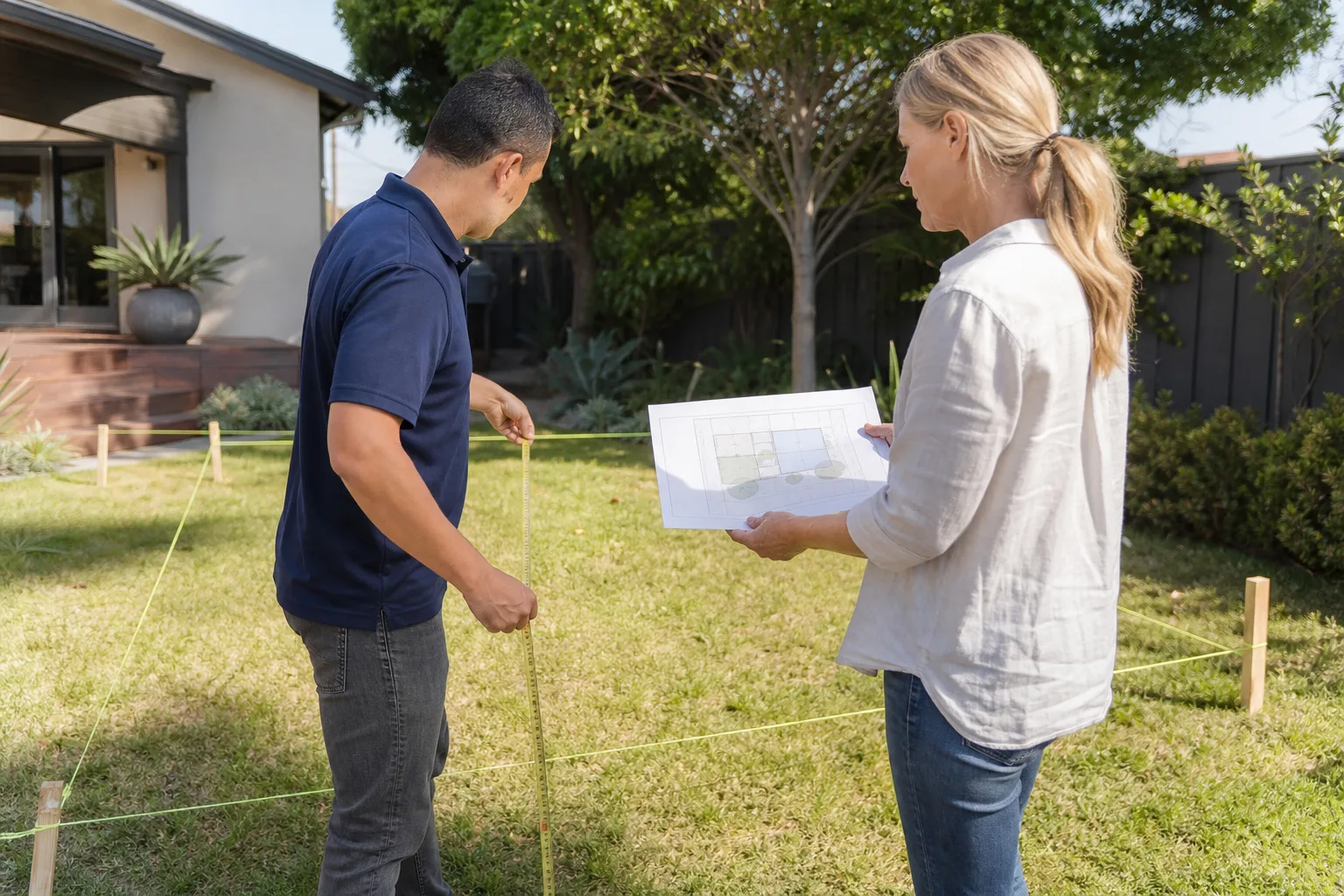
- Skipping the site visit before the price. Any contractor who gives a fixed price without walking the site is setting you up for change orders. The price is only as good as the site data behind it.
- Ignoring the warranty language. California requires a one-year fit-and-finish warranty. If it is not in your proposal in plain English before you sign, it will not magically appear after the final check clears.
- Choosing based on the lowest bid. A low bid in Orange County often means the contractor has under-scoped the utilities, the site work, or the finishes. The difference shows up as change orders within 60 days of breaking ground.
- Not asking about sub-tier trades. Your ADU will involve an electrician, a plumber, an HVAC tech, and probably a roofer. Ask who they are and verify they are licensed and insured. A good prime contractor will name them without flinching.
- Waiting to address access constraints. If your lot has a narrow side yard, tight setback, or overhead power lines, that affects crane placement, excavation, and material delivery. A real ADU contractor flags this at the first site visit, not after the permit is pulled.
When to Call a Professional
If you are serious about building an ADU in Orange County and want a written price, a named team, and a guarantee in writing before you commit, call a specialist. A site visit is the only way to get a real number. We walk the lot, check access, look at the utility connection points, and then put a written price in your hand. No estimates. No vague allowances. A fixed number with a scope of work attached. Lodgewick ADU Orange County offers free estimates in Orange County. Call (350) 203-6060 and a live person will answer. You can schedule a site visit and get the process started the same day.
Frequently Asked Questions
In Orange County, a site-built detached ADU typically costs $250 to $450 per square foot, which puts a 500-square-foot unit at roughly $125,000 to $225,000 before site work and utility connections. A garage conversion of the same size usually runs $120,000 to $180,000 all-in. Prefab ADUs from brands like Abodu or Cover often land in the $150,000 to $350,000 range depending on finish level and site conditions. Every lot is different, so the only way to get a real number is a site visit with a written price. Call (350) 203-6060 to schedule one. Estimates are free.
From design to move-in, a site-built ADU in Orange County typically takes 10 to 18 months. A prefab ADU can be faster, often 6 to 12 months, because the factory build happens while site work and foundation are underway. The permit process in most Orange County cities takes 3 to 8 months from submittal to approval, and construction itself runs 4 to 8 months for site-built or 2 to 6 months for prefab. The biggest variable is the city plan check timeline, which varies significantly across Orange County.
Yes. Every ADU in Orange County requires a building permit from the city where the property is located. California state law establishes the framework, but each of Orange County’s 34 cities enforces its own specific ADU ordinance covering setbacks, height limits, parking requirements, and design review. A contractor with experience in your specific city knows which ordinance applies and how the local plan check process works.
A JADU, or Junior Accessory Dwelling Unit, is a smaller living unit created within the existing walls of a single-family home, typically by converting a bedroom or attached garage into a unit with its own kitchenette and entrance, maximum 500 square feet. An ADU is a fully independent dwelling, either attached or detached, with its own full kitchen, bathroom, and address. JADUs are generally less expensive to build because they reuse the existing structure and utilities, but they also add less square footage and rental value.
Most single-family residential properties in Orange County are eligible for at least one ADU under California state law, which preempts many local restrictions. The key factors are lot size, setback space, utility connection access, and any HOA covenants that may apply. Some cities impose additional design review or coastal zone requirements. A site visit with a contractor who knows Orange County ADU ordinances will tell you what is feasible on your specific lot.
A legitimate ADU contract in Orange County should include a fixed written price, a line-item scope of work, dollar-capped allowances, named subcontractors, a written change order process, and warranty language stating the duration and coverage. If any of those elements is missing, ask for it in writing before signing. A contractor who will not put the price, the scope, and the warranty in writing is not a contractor you want on a six-figure ADU project. Call (350) 203-6060 if you want to see what a written price commitment actually looks like.
The Bottom Line
Hiring an ADU contractor in Orange County is a different process than hiring a general remodeler. The permit complexity, the financing timeline, and the dual-occupancy design requirements demand a specialist who has pulled ADU permits in your city and can prove it. Verify the license on the CSLB website. Check the permit history on your city’s portal. Ask the five phone questions. Require a written price with capped allowances and named warranty language. Do those five things in order, and you will avoid the $15,000 to $40,000 change order trap that catches most Orange County homeowners. For more guides & resources, visit our blog. The right contractor will welcome every one of these checks. The wrong one will resist them. That is the test.
Written by Russ Delmar, Owner at Lodgewick ADU Orange County, serving Orange County since 2010.